Evolving Trends in Interim Management
Increased Demand in Key Sectors
The demand for interim managers fluctuates with economic cycles but recent trends show increased demand in sectors like manufacturing, healthcare, and technology. There’s also a growing rise in fractional interim management roles and a focus on sector-specific expertise rather than general interim experience.
Introduction
How Economic Cycles Influence Interim Management Demand
The demand for interim managers remains steady but fluctuates with economic cycles and industry disruptions. During times of economic uncertainty, companies increasingly seek agile interim leaders who can manage change or turnaround situations.
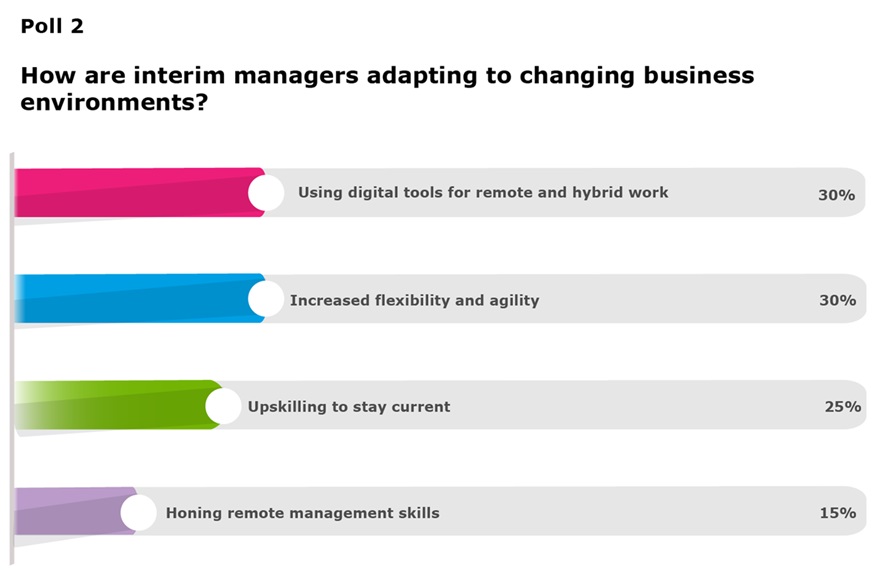
In 2021 and 2022 significant changes took place in the interim management landscape. Despite the global uncertainty caused by the COVID-19 pandemic, business required flexible interim leadership solutions. The need for highly experienced interim managers, particularly at the senior leadership level, was critical to solving business challenges swiftly and delivering impactful results.
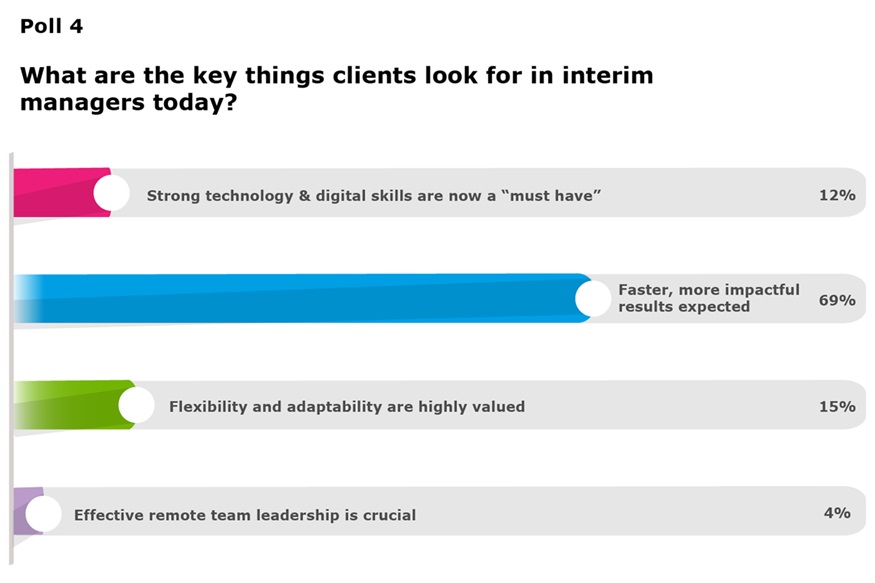
Today, clients have heightened expectations from interim managers and demand faster, more impactful results. This underscores the dynamic nature of interim management, where adaptability and a clear return on investment are essential.
Looking ahead, the future of interim leadership roles appears promising. Companies facing ongoing disruptions and uncertainties will increasingly rely on interim leaders who can deliver measurable results quickly. The productivity of the past year has surpassed that of 2023, indicating a positive trend for the interim management demand for sectors like healthcare and manufacturing.
Market Overview
Insights into the Current Interim Management Landscape
During the ‘Boyden Brief’ call, we provided a market update for the interim management community. The first half of the year was busy, and despite the client-focused market, many top interim candidates remained available. Over the late summer, we noticed a significant uptick in demand for interim CFOs, operations leaders, and managing directors’ roles in particular. Increasingly, clients are seeking sector-specific expertise, valuing sector expertise over broader interim expertise from interim leaders in industries like manufacturing and healthcare.
Experienced interim managers who can quickly navigate organisations are highly favored, while executives transitioning between interim and permanent roles face more competition. However, executives entering the interim management sector are finding opportunities through their personal networks.
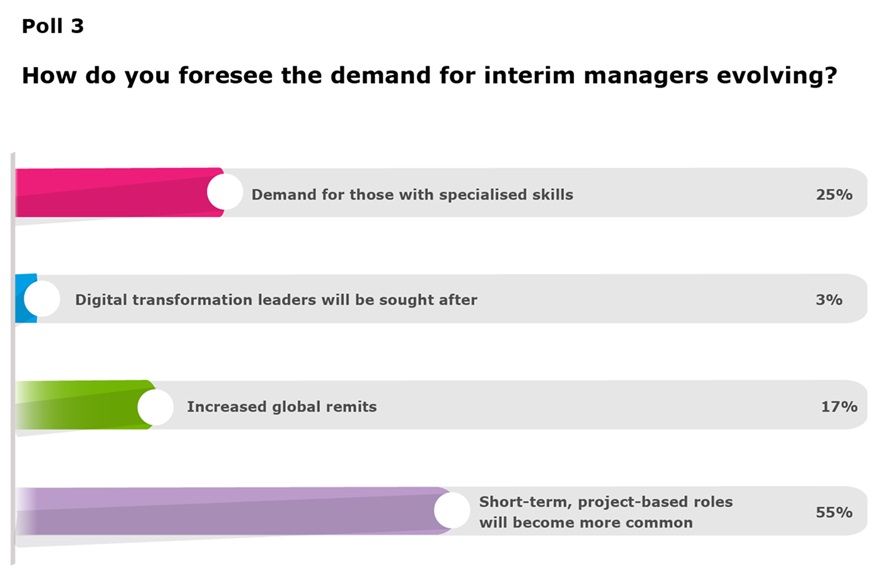
Key sectors driving demand for interim management include manufacturing, healthcare, energy and technology, which mirrors the focus of many of our search partners. Interim leadership in these sectors is particularly valued for its ability to tackle short-term, project-based roles.
In today’s current buyer's market, interim professionals should focus on building relationships and aligning with contacts who have industry-specific needs. Fractional interim management is growing in popularity, allowing interim managers to handle projects simultaneously, while day rates have remained stable or marginally decreased. Some assignments involve fixed-term contracts (FTC), but compensation generally depends on the critical nature of the role, expected outcomes, and scarce skills.
We’ve also observed a cultural shift towards a more empathetic approach to assignments, where stakeholder management and engagement are key to success.
Poll Results
How Interim Management is Evolving
Faster results now define interim manager expectations