Articles & Papers
Capable Hands in Times of Change: Interim Leadership for Family-Owned Businesses
By Boyden Interim Team
Family-owned businesses often weather storms that have the potential to topple their corporate counterparts. But the very things that make them great—loyalty, passion, deeply held values—can lead to challenges.
When a founder struggles to let go, when siblings disagree on strategic direction, or when the next generation isn't quite ready to assume full control, the business can stall just when it needs decisive action.
Interim management offers a compelling solution. Interim executives provide experienced, leadership at moments of inflection while managing the nuances of family control and culture. They offer something increasingly rare in business: seasoned expertise that's detached from ego and politics.
Interim management for family businesses can provide an agile, cost-effective solution that respects the organisation's dynamics and values while driving results.
"Family businesses turn to interim executives to deliver immediate expertise, drive rapid change and provide flexible leadership precisely when organisations need it most.”
Lisa Farmer
Global Practice Leader, Interim Management, United Kingdom
Managing Partner
Why Family Businesses Turn to Interim Leaders
- More than 5 million family businesses in the UK account for 93% of all firms in the private sector, according to the Family Business Research Foundation.1
- UK family businesses generated £2.8 billion in total revenue in 2023, almost half of the UK private sector total, the foundation says.1
- In Germany, the 2.9 million family-owned businesses account for 90% of all businesses and generate c.55% of total annual revenue, according to the professional services firm Flick Gocke Schaumburg (FGS).2
- German small businesses also account for 57% of all employment, FGS says.2
- In the Netherlands, the more than 275,000 family businesses account for about 53% of the gross national product and 50% of employment, according to Nyenrode Business Universiteit.3
- Family firms generate 50% of the European Union’s GDP and account for 40% to 50% of all European private sector jobs, according to BNP Paribas Wealth Management.4
Serving the needs of family enterprises requires a particular skill set. Family enterprises typically engage interim executives when they need immediate, specialised leadership. The triggers vary, but the underlying need is the same: expert guidance while the family and business navigate complex transitions.
- An unexpected departure—from a sudden illness or unexpected retirement—can leave critical positions unfilled. Rather than rushing into a permanent hire during a crisis, families benefit from interim leadership that stabilises operations while they search for the right long-term leader.
- Rapid growth or diversification can strain management structures. A business that's scaling up or entering a new market may find that it needs stronger systems, processes, and leadership capabilities. Interim executives who have guided similar transformations can orchestrate growth without the growing pains that derail many expansion efforts.
- Operational challenge or transformation needs often require specialised expertise the family doesn't possess. Whether implementing new technology or restructuring operations, interim leaders bring experience and industry-specific knowledge that can otherwise take years to develop.
- Strategic projects requiring specialist expertise—such as post-merger integration or a business turnaround—can be managed by executives who have executed these initiatives multiple times across different contexts.
- Acquisition - when a larger company acquires a family business, an interim leader can bridge the gap to enable gradual leadership transitions while balancing new business practices and imperatives with core traditions and values.
Interim management gives family owners something invaluable: breathing space. Without the pressure of making a long-term commitment on a key leadership position, the business can maintain its momentum.
Claire Lauder, Boyden Managing Partner, United Kingdom, emphasizes that: “Family businesses come in all sizes, from small local enterprises to global industry leaders, each contributing uniquely to the economy and community.”
What Are the Benefits of Interim Management?
Family businesses often find great value in enlisting an interim executive, particularly when they work with a discreet placement agency that has a proven record of balancing family priorities with business demands. Among the benefits are:
- Speed. Interim executives can start working quickly—typically within 5 days of being selected.
- Expertise. Interim executives are often overqualified. They may be senior executives who focus on interim work after developing experience in their field.
- Objectivity. Having no agendas, they can be honest and objective.
- Cost effective. A family business can achieve a high ROI with an interim by securing a skill set that is needed for a shorter time without the long-term commitment.
Building Trust and Fit: The Human Side of Interim Appointments
Family enterprises run on relationships. They possess intangible assets that can provide a powerful competitive advantage: the bonds between employees, the connection to customers, the shared identity between family and business.
Cultural fit and trust are non-negotiable when bringing in external leadership, which is key with shorter-term talent solutions.
Successful interim engagements begin with an open, transparent approach from both the interim leader and the family. Interim executives must recognise that they're entering a system of relationships built over years, perhaps decades. History matters and context is everything. Families, in turn, must be willing to share that context honestly. They must be willing to discuss not just operational challenges but the sometimes-uncomfortable realities of their relationships, such as family dynamics and succession concerns.
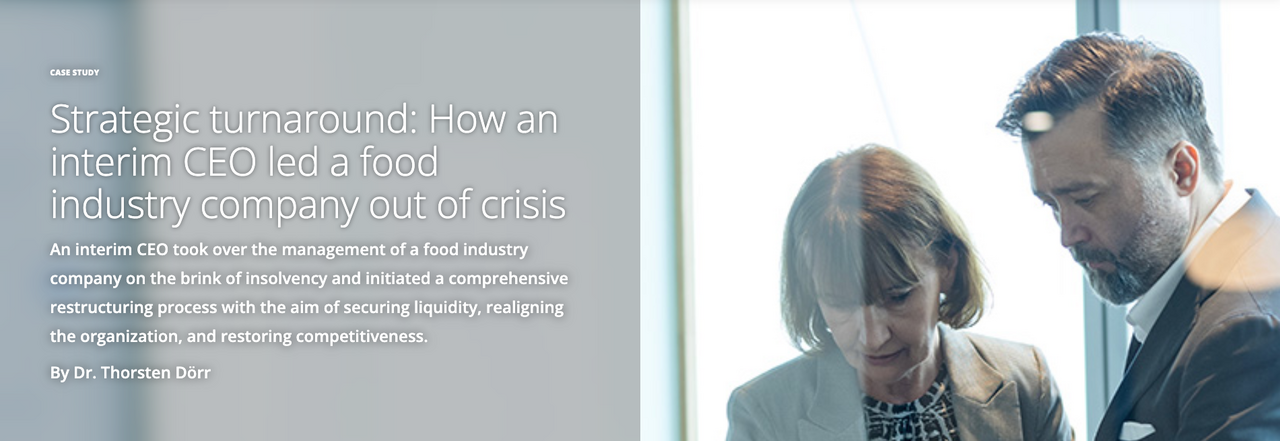
“The interim executive was able to lead a comprehensive restructuring process to secure liquidity, realign the organisation and restore competitiveness,” observes Thorsten Dörr, Boyden Managing Partner, Germany.
Interim leaders gain credibility by listening, showing humility, and respecting the company's history. They understand that their expertise means little if they can't adapt it to the family's unique circumstances. The most effective interim executives spend their first days and weeks asking questions, observing patterns, and building relationships with key stakeholders. They demonstrate that they want to support the family's vision, not impose their own.
This is where emotional intelligence and soft skills become as critical as technical capability. An interim CEO with impeccable financial acumen can't succeed without the ability to navigate family dynamics and guide conflict resolution with sensitivity.
How to Set Up Interims for Success
In a situation that can be fraught with emotion, it helps to set up a clear structure for the relationship between the interim manager and others. Clear expectations and a thorough onboarding help turn interim executives into accelerators of success rather than temporary placeholders.
Start with a Clear, Quality Brief
Define outcomes, not just activities. What does success look like at the end of this engagement? Is it improved financial performance, successful implementation of new systems, a seamless leadership transition, or mentorship of the next generation?
A well-crafted brief articulates objectives, timelines, success metrics, and the scope of authority the interim will have. It also acknowledges constraints, such as budget limitations, family knots that must be untangled, or family processes that they are reluctant to disturb.
Interim leaders need context: the company's history, its culture, key relationships, past attempts to solve current problems, and why those attempts fell short. They need access to stakeholders—family members, board members, key employees, important customers and strategic partners.
Maintain Open, Structured Communication
Don't leave something as indispensable as communication to chance. Establish weekly or bi-weekly touchpoints between the interim executive and family leaders. These shouldn't be merely status updates but substantive conversations about progress, concerns, what's working, what's not, what's being learned and what adjustments are necessary.
Transparency, in both directions, prevents small issues from becoming major problems.
Treat the Interim as a Trusted Partner
"Our clients have the confidence to bring in the right external expertise. This is how many family businesses safeguard their legacy by acting decisively and differently," says Josh Blackman, Boyden Partner, Interim Management, United Kingdom.
The most successful engagements set up the interim executive as a right-hand person to family leadership, not as a threat to ownership or a harbinger of unwelcome change.
When family leaders visibly support an interim, introduce them to key stakeholders with genuine endorsement, and give them appropriate authority to act, the rest of the organisation follows suit. Conversely, when family members undermine or circumvent an interim, engagement falters regardless of the executive's capabilities.
Interim leaders thrive when they have clarity about what needs to change and the authority to change it, while also having the humility to recognise what should be preserved. The best engagements create this balance through explicit conversation early and often. Case in point: Boyden appointed an interim COO with a long-established, privately held marine technology company to lead an 18-24 month transformation. The results included a return to profitability, rebuilding operational discipline and installing repeatable processes and roadmaps that endure beyond the interim’s tenure. Clear objectives, structured cadence and cultural alignment were decisive.
Myths about Interim Management for Family Businesses
Despite the proven value of interim leadership, family businesses often hesitate, held back by misconceptions about what interim management really means.
Myth: "They'll disrupt our culture."
In reality, skilled interim executives preserve and strengthen culture rather than undermining it. Professional, experienced interim executives with a proven track record have worked across enough organisations to distinguish between cultural elements that make a business succeed and dysfunctional patterns that hold it back.
Unlike permanent hires who may push for culture change to assert their position, interim leaders recognise that their role is to work within the existing culture while helping it evolve and grow stronger where necessary. Good interims protect and strengthen culture by modelling accountability while honouring family values and governance.
Myth: "They're just stop-gaps."
This drastically underestimates the lasting value interim leaders can create. Yes, they fill immediate gaps, but the best interim executives:
- Build foundations for successors.
- Establish processes that outlast their tenure.
- Develop talent within the organisation.
- Solve problems permanently rather than temporarily.
They're not keeping a seat warm—they're building institutional capabilities and strengthening organisational muscles that will serve the business long after they've moved on.
Interim managers offer strategic value, deep experience, best practice and insights helping family-owned businesses to navigate change successfully.
Bas Fransen
Partner, Interim Management, Netherlands
Myth: "They won't understand our family dynamics."
Experienced interim executives have worked across varied industries, ownership structures, and cultures. They've navigated family councils and shareholder disputes, mentored next-generation leaders unsure of their readiness and counselled founders struggling to let go. They know how to listen, observe and adapt.
Rather than being baffled by family dynamics, seasoned interims understand that these dynamics often follow recognisable patterns.
“Interim managers bring a deep understanding of family business dynamics, balancing tradition with transformation to achieve lasting results,” says Maurice Carr, Partner, Interim Management, Ireland.
Their outside perspective can be invaluable precisely because they're not caught up in decades of family history. They can see situations more objectively while still respecting the emotional weight carried by family members who live and breathe the business.
The best interim executives balance independence with empathy. They work with the family, not around it. They challenge assumptions when necessary but do so respectfully, recognising that for the family, this isn't just a business—it's a legacy, an identity and often the culmination of a life's work. This combination of professional distance and personal respect is what makes interim leadership so effective in family business contexts.
The Lasting Impact: Legacy, Mentorship, and Growth
When a mandate for an interim leader is clear, and communication is open and consistent, an interim leader can make contributions that extend far beyond the operational improvements listed in final reports. They set the business and the family on a path to sustainable success.
How Do Interim Leaders Help Build a Talent Pipeline?
Mentorship of rising stars represents one of the most enduring benefits of interim engagements.
A next-generation family member working alongside an experienced interim CFO, COO, or CEO gains exposure to strategic thinking and leadership approaches they couldn't learn any other way. Up-and-coming talent can ask questions, test ideas and discuss concerns that might be uncomfortable to raise with parents or siblings.
This mentorship can often build confidence in emerging leaders and accelerate their readiness for greater responsibility.
Do Interim Leaders Have a Lasting Impact?
In some family businesses, institutional knowledge can reside in one generation. Interim leaders can provide lasting value by documenting what was previously closely held knowledge.
They can reduce dependence on any single individual by building organisational capabilities based on that institutional knowledge and creating frameworks for consistent decision-making.
Interim management can provide lasting benefits in several ways.
The leaders of a family business sometimes get too caught up in the daily work to think clearly about what comes next. Interim leaders can help families clarify their vision for the future.
By asking probing questions about growth strategy, facilitating difficult conversations about succession planning, or offering their experience from similar situations, interims help families reach decisions that might otherwise be delayed indefinitely.
"A third-generation family business found itself navigating sudden global disruption with limited internal capability. The solution was the confidence to bring in the right external, interim expertise." says Claire Lauder, Managing Partner, Interim Management, United Kingdom.
Interim leaders also demonstrate behaviours and approaches that can become models for the organisation. Long after they've completed their engagement, their influence persists in the improved capabilities of the team they worked with and the organisational transformation they helped achieve.
Interim management isn't about plugging gaps—it's about preparing for the future. The goal isn't to merely survive a transition but to emerge stronger, more capable and better positioned to thrive across generations.
The Steady Hand for the Next Chapter
When family-owned businesses need allies who understand both the technical demands of business and the human dimensions that make family enterprises unique, interim leaders can provide this combination.
The most successful interim engagements recognise what makes family businesses special and work to strengthen rather than compromise these distinctive qualities. They protect the business during vulnerable moments, respect its values and traditions and drive it forward with skill and empathy. Thorsten adds,“Interim leaders leave a lasting legacy by strengthening teams, building resilience, and setting businesses up for long-term success.”
Successful transitions require structured development of the next generation, through formal education, external work experience and gradual introduction to leadership roles.
For family businesses facing leadership transitions, operational challenges, or strategic inflection points, interim management offers more than a temporary solution. It provides:
- Experienced leadership precisely when it's needed most.
- Mentorship that accelerates the development of future leaders.
- An outside perspective that helps families see possibilities they might have missed.
Lisa Farmer, Managing Partner, Interim Managment, United Kingdom, adds, "Boyden’s interim and search teams work hand in hand exemplifying the close partnership and integrated approach that sets Boyden apart."
Boyden brings 80 years of experience in helping private, family-owned organisations find the right leaders—both interim and permanent. We understand the dynamics of family-owned businesses and know how to balance family priorities with business demands.
Boyden partners with family-led organisations to address the complexities of legacy, leadership and growth. We bring the experience and discretion needed to balance family priorities with business demands, ensuring stability today and long-term success. Our global expertise and deep experience with family-owned businesses enables us to identify and place interim leaders who become catalysts for sustainable success.
Every family business eventually faces transition challenges. When that occurs, Boyden’s entrepreneurial structure and mindset can help your business to build and sustain success across the generations.
Sources
- FamilyBusiness.org, “Family businesses have a massive impact on the UK economy,” n.d.
- https://familybusiness.org/content/family-businesses-have-a-massive-impact-on-the-uk-economy
- FGS Global, “Family‑owned businesses: Keeping the German economy afloat,” n.d.
- https://www.fgs.de/en/news-and-insights/blog/detail/family-owned-businesses-keeping-the-german-economy-afloat
- Nyenrode Business University, “Family Business Research at Nyenrode,” n.d.
- https://www.nyenrode.nl/en/faculty-and-research/faculty/lectern/family-business/family-business
- BNP Paribas Wealth Management, “New report: Family governance in Europe — trends and insights,” n.d.
- https://wealthmanagement.bnpparibas/en/insights/news/new-report-family-governance-europe-trends-insights.html