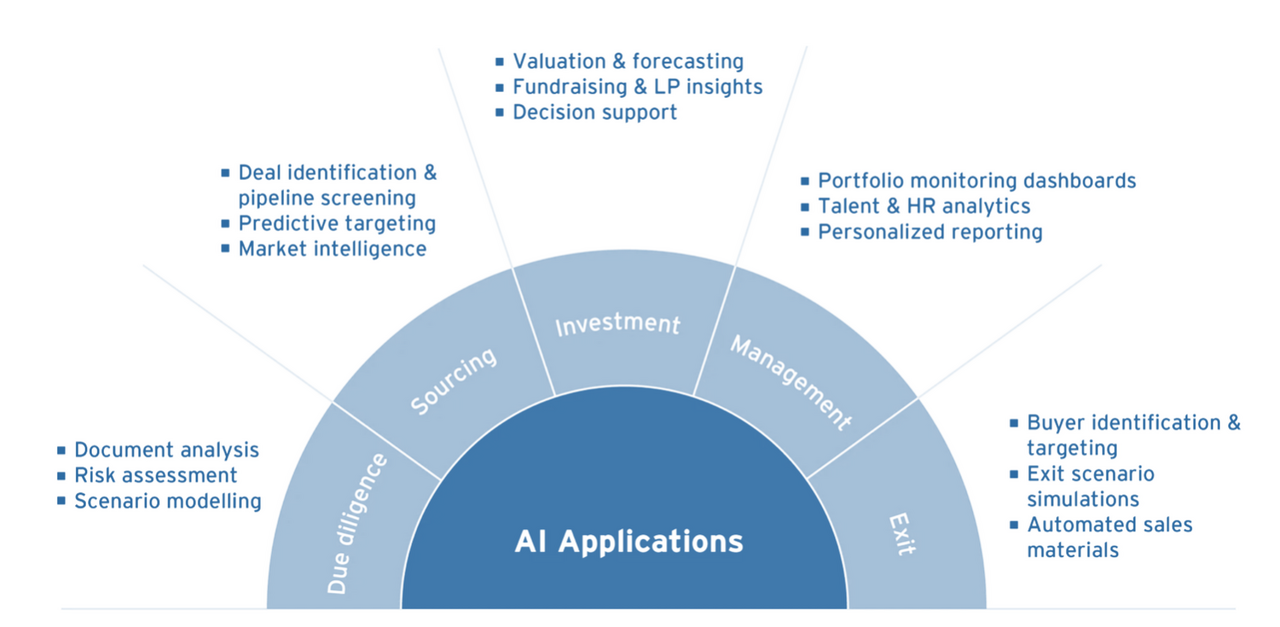
This inflection point in the global economy reminds us of the iterative nature of innovation, with AI transformation now playing out simultaneously across geographies, industries and organisations.
A broader geographic focus: Asia in the spotlight
‘Luck is what happens when preparation meets opportunity,’ we are reminded by KKR10. Private equity is controlling outcomes and adding alpha by aligning business models, creating the right organisational structure and governance, and pursuing active ownership.
The industry is also broadening its geographic focus, with KKR promoting more ownership in Asia at this point in the credit cycle, spurred on by positive signs in corporate reform and consumption upgrades11:
- Japan: 40% of the market still trades far below book value; 17% of corporate assets are in cash
- India: ripe for consumption upgrades
- Korea: green shoots in corporate reform
- South East Asia: ripe for consumption upgrades
William J. Farrell, APAC PE/VC Regional Practice Leader, notes: “Across Asia, private equity is pairing structural reform with disciplined capital deployment, creating opportunities for investors prepared to scale leadership and governance alongside growth.”
Europe remains attractive, with new growth expected in 2027 and fast capital raising to 2030, noted at the SuperReturn conference 2025. “Private capital isn’t just bouncing back; it’s powering Europe forward," comments Eric de Montgolfier, CEO, Invest Europe12. Europe’s fragmentation creates opportunities for country and sector specialists, as well as the increasing ambition of European tech platforms focused on international expansion and strategic financing, as noted by tech-focused banking boutique, Clipperton13.
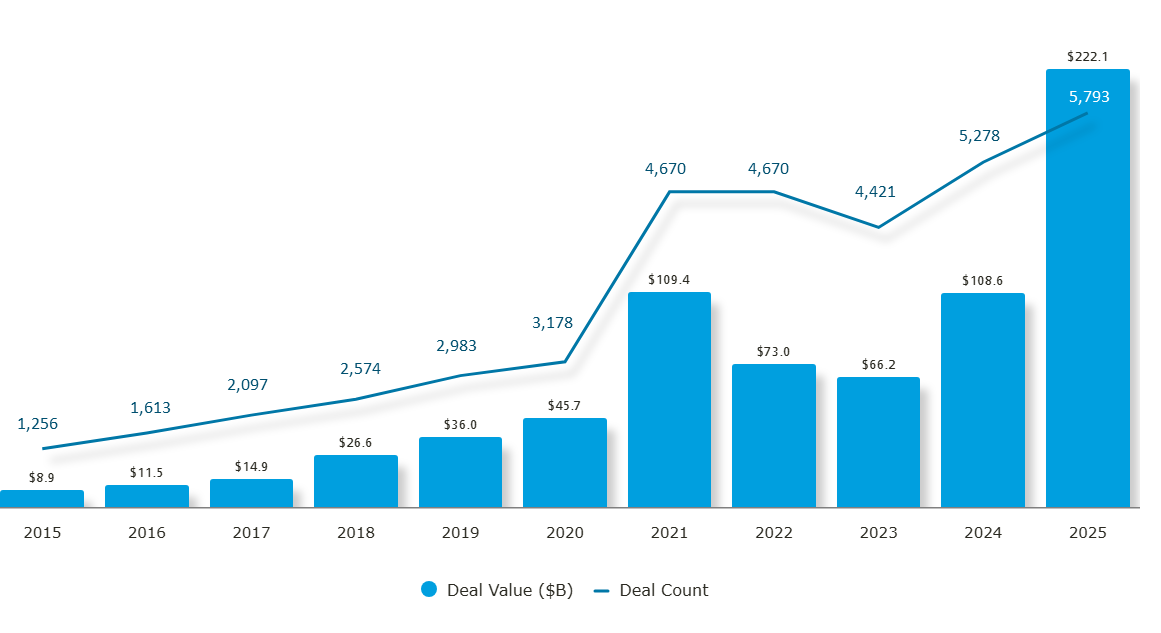
In the US, private credit is becoming central to the private equity ecosystem, with the US market doubling since 2019 to nearly $1.3 trillion and over $400 billion in dry powder, according to EY analysis of Pitchbook data14.
Indications go against AI ‘bubble mania’
How does AI ‘bubble mania’ fit into this context?
Commentators refute CEO of JPMorgan Chase Jamie Dimon’s concerns about an AI bubble, including HSBC. The universal bank asserts that with earnings well supported, margins remaining high, interest rate cuts in the US and innovation boosting productivity, AI and tech stocks are not in bubble territory15. José Rasco, Americas Chief Investment Officer at HSBC Private Bank comments, “As AI deepens its models and expands globally, innovation is extending its life and broadening the opportunity set beyond mega tech”.
Analysts at Clipperton agree. ‘AI has evolved from a thematic growth driver into a core capability across products, go-to-market strategies, and internal operations, materially enhancing scalability and efficiency.’16
Morgan Stanley points to the benefits of AI going beyond large-cap public companies, cascading into mid-sized private companies, PE’s sweet spot. These organisations are leveraging AI to drive efficiency, accelerate product development and enhance customer engagement17.
Little room for complacency
There are distinct indications for a promising year ahead: private equity is on the front foot, liquidity innovation and new sources of funds are gaining traction, while external challenges such as supply chain shocks, higher financing costs and trade wars are mostly in abeyance.
However, Brad Lightcap, COO of OpenAI shares a note of realism, explaining, “The enterprise moment hasn’t happened yet”. While AI is transforming consumer behaviour and creative workflows, most companies are still at the starting line. “That doesn’t mean it’s slow, it means it’s distributed. I don’t think there will be one ‘ChatGPT’ moment in the enterprise. It’ll be a collection of small ones.”
Lightcap urges founders to stay close to the shifting substrate. “The rules that used to govern startups feel archaic now,” he said. “The winners will be those who thrive in chaos.”
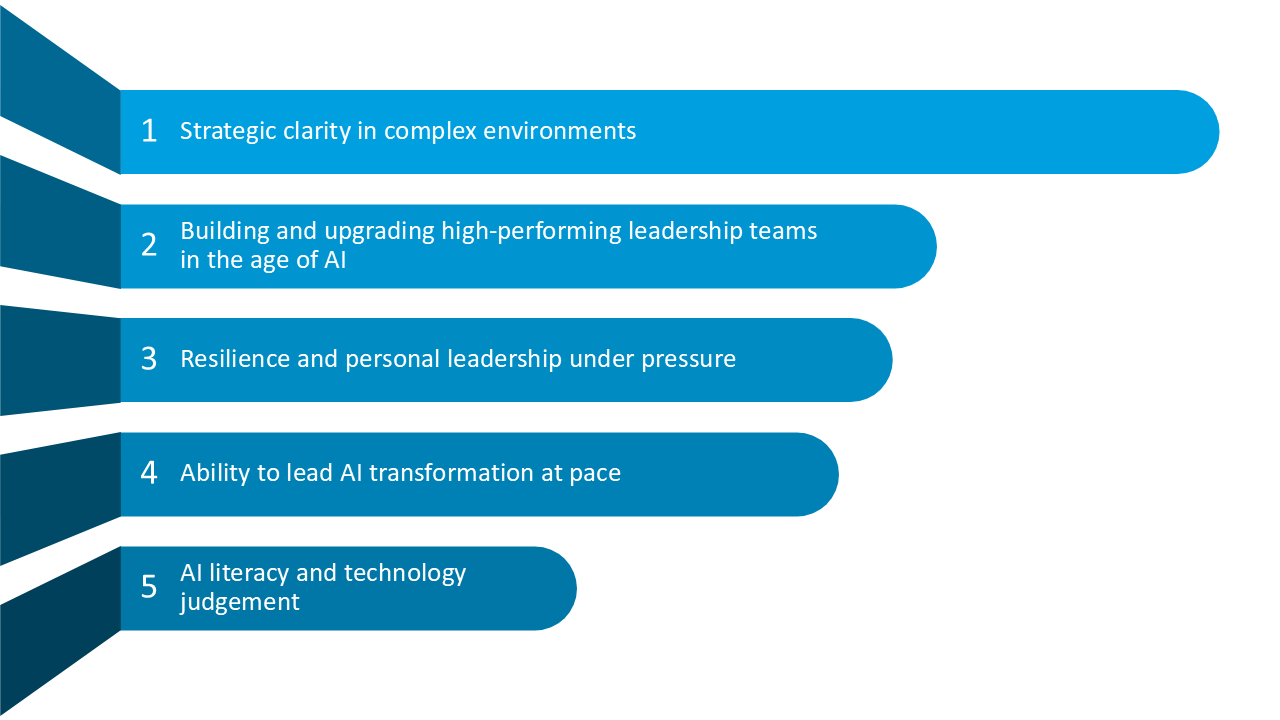
From a leadership perspective, there are several key questions to address, highlighted by Boyden’s Anita Pouplard: “The leadership focus today is on how leaders can preserve their leadership when AI reshuffles the deck. How can they lead with clarity when tomorrow’s fundamentals are set to profoundly reshape organisations? Between value creation and upskilling teams, CEOs are facing major human challenges. In times of transformation, ‘leadership anchoring’ becomes a critical success factor.”
Talent truths
Indeed, at the latest Iconiq Frontier forum, a strong consensus on leadership emerged. ‘The most powerful force shaping AI isn’t technical, it’s human. How we lead, apply, and scale this technology will decide whether it unlocks new potential or just speeds up the status quo’18.
That new potential is both technical and human. Agentic AI is expected to drive extensive change across industries, with leaders striving to understand the new breed of engineers, change makers and ‘soothsayers’ they need. As Rob Lee, CTO of Pure Storage says, “AI is evolving into essential infrastructure”. GPs already see governance, security and interoperability as accelerants. Now, “With Agentic AI, teams and tools must be trained to think together,” says May Habib, CEO of Agentic AI company, Writer.
Teams and tools must think together, just as board level AI ambition and implementation capabilities must link together.
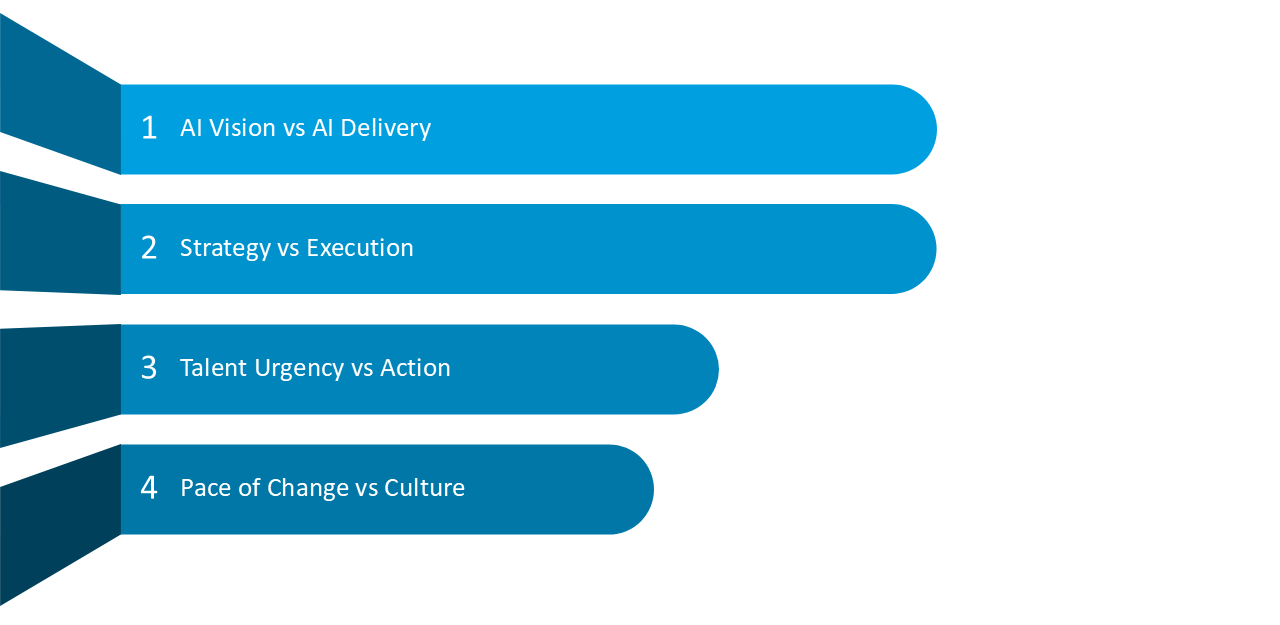
Boyden poll data reveal the extent of the challenge here, showing the difficulties of translating board vision, strategy and talent needs into concrete team action and results within portcos.
Our ranking shows that top disconnect is between AI delivery and the board’s AI vision, followed by execution of strategy, and actioning talent needs. Even in potentially more nimble organisations, culture is restricting the pace of change: