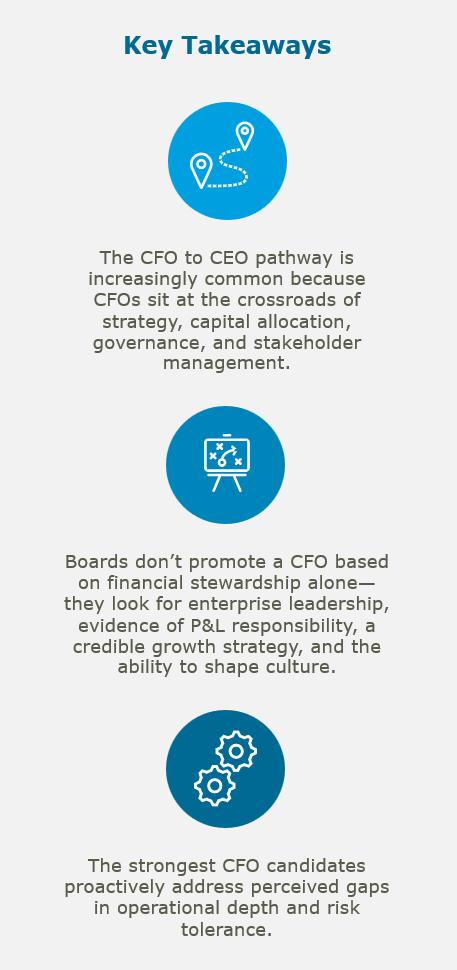
Boards of directors have shifted the way they think about CEO succession. For decades, the default pathway to the top ran through the chief operating officer—the strategist, the culture-builder, the heir apparent who had walked the factory floor and run the business units. Today, an increasing number of boards are asking: Could our CFO lead this enterprise?
Signal Energy is one of the companies whose board answered that question with a resounding "Yes." Robert L. Tabb was elevated from CFO of Signal Energy, a private equity-backed utility-scale EPC company, to President and CEO. Under his leadership, the business delivered its best year in company history in 2025 with key energy utilities and developers as clients across the U.S. energy sector. To date, the company has built ~9GW portfolio of assets composed of utility-scale solar, high voltage and battery storage systems.
Signal Energy's experience offers a case study in how the CFO to CEO pathway can work for an executive, a company, and its board.
Why Are Boards Turning to the CFO as CEO Successor?
The CFO role has changed dramatically. Modern CFOs oversee not just financial reporting and capital markets relationships but also:
- Strategy Creation, not just implementation
- Business partnering across every function
- M&A strategy
- Digital transformation investments
- Risk management frameworks
- Investor relations that shape how the market values the organization
This elevated role often leads boards involved in CEO succession to look for that kind of wide-ranging CFO profile, says Rebekah Le, Audit Committee Chair on Signal’s Board. Tabb and Le, who also has extensive experience as a CFO, were guests at a Boyden Global Financial Officers Practice Group Call focused on the transition from CFO to CEO.
Tabb describes a path filled with experiences on the financial side, including acquisitions, corporate forecasting, and stepping into the role of CFO dedicated to strengthening Signal’s standing as a major Tier-1 player in the renewable EPC space.
He also made it a point to build relationships with operational teams, walk project sites, work with investors, welcome new job opportunities that would build out his skills, and embrace high-risk, high-reward situations.
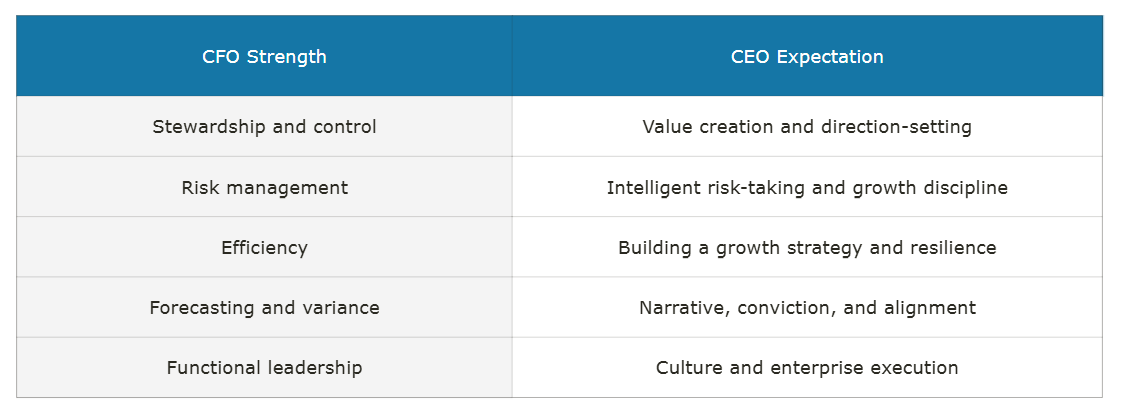
Tabb and Le say that a high-performing CFO typically possesses a set of qualities that boards prize in a CEO candidate, including:
- Enterprise-wide line of sight. The CFO sees every business unit, geographic location, and function through a common financial lens. Divisional leaders might need years in the CEO role to develop this broad perspective.
- Capital allocation discipline. CFOs are well-versed at evaluating trade-offs between organic investment, M&A, returns to shareholders, and operational efficiency.
- Stakeholder management credibility. The CFO has already built deep relationships with the board of directors, institutional investors, lenders, and regulators, exactly the stakeholder set a CEO must manage.
In periods of financial stress, regulatory pressure, or strategic transformation, these qualities become especially valuable. It is no coincidence that CFO-to-CEO transitions often accelerate during periods of turnaround or change—moments when boards need a leader who understands the numbers and can move with both speed and conviction.