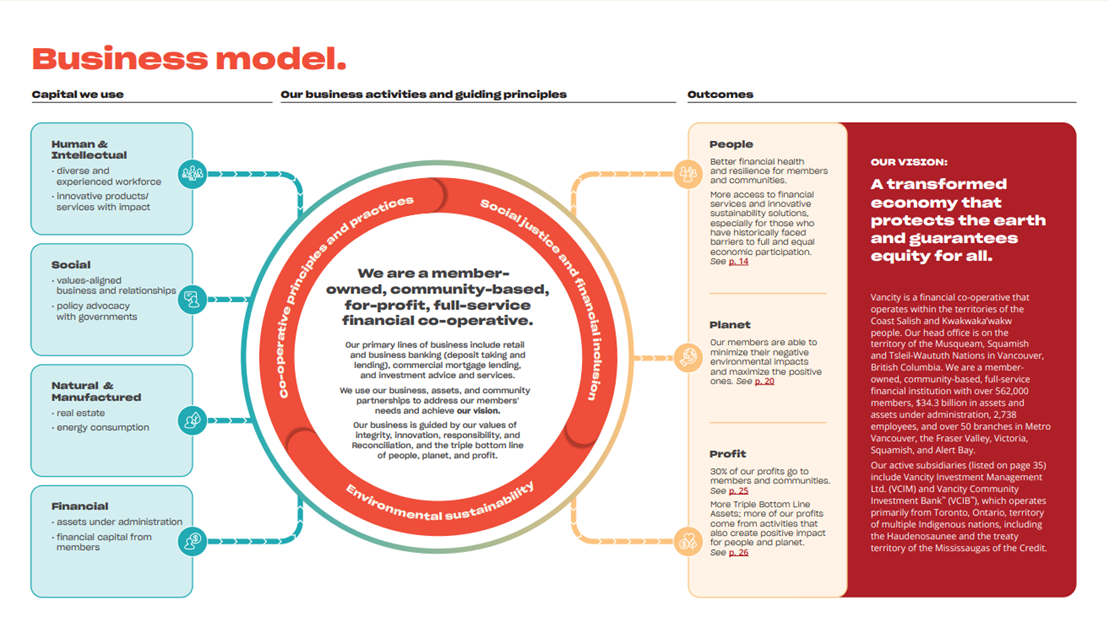

When Vancity formed in 1946, their founders set out to do something different – something to help each other and their communities. As a financial co-operative, Vancity exists for the sole benefit of their members and their communities and, as a result, they act in members’ best interest. This often means taking risks and breaking norms. Even their founding members pushed the envelope of what was common practice among credit unions at the time.
Canadian credit unions were established in the early 20th century, emerging at a time when banks made it difficult for the average citizen to borrow or invest. In the early days most credit unions formed around a common bond, such as a workplace, trade, church or ethnic affiliation. This made sense given that the original idea behind credit unions was to lend money on the basis of character rather than wealth or property. The common-bond credit unions increased access to credit, but left out those who didn't belong to one of these groups. Soon a few credit union activists began promoting the idea of an open or community-based credit union in Vancouver that would allow any resident of the city to join. Although it was a rather unorthodox idea at the time, supporters of the idea were passionate.
On September 28, 1946, 14 Vancouverites signed a charter to establish an open-bond credit union called Vancouver City Savings Credit Union. About two weeks later—October 11, 1946—the credit union became official. Today, Vancouver City Savings Credit Union, known simply as Vancity, is Canada's largest community credit union. Vancity was always, and remains, a credit union committed to a clean and fair world. They develop innovative products and build partnerships with communities to address their members' needs. With 54 branches in Metro Vancouver, the Fraser Valley, Victoria, Squamish, and Alert Bay, Vancity serves more 550,000 member-owners and their communities in the Coast Salish and Kwakwaka'wakw territories. Vancity uses their assets to help achieve their vision of a transformed economy that protects the earth and guarantees equity for all.
Vancity’s subsidiaries include Vancity Investment Management Ltd. (VCIM) and Vancity Community Investment Bank (VCIB), which operates primarily from Toronto, Ontario, on the territory of multiple Indigenous nations, including the Haudenosaunee and the treaty territory of the Mississauga of the Credit.
Today, Vancity has 2700+ purpose-driven staff working in 54 branches and head office. Approximately 30% of staff are unionized: the majority in the BC General Employees’ Union (BCGEU) and a smaller percentage in the Public and Private Workers of Canada (PPWC)
Learn more about Vancity, here and here.
By the Numbers
Members: 560,000+
Assets plus assets under administration: $33.2 billion
Assets: $26.6 billion
Branches: 54
Employees: 2,721
Shared Success: $444.4 million shared with communities since 1994
The Vancity Difference
- Vancity was founded in 1946 to provide financial services to people from all walks of life.
- Vancity offers a full range of financial products and services for individuals, businesses and not-for-profit organizations, including daily banking, investments, mortgages, loans, and credit cards.
- Vancity is a co-operative, which means they are owned by their members and democratically controlled on the basis of one member, one vote.
- Vancity is committed to values-based banking and joined the Global Alliance for Banking on Values in 2010.
- Vancity shares 30% of its net profits with members and communities—they've shared over $444.4 million with members and communities through Shared Success since 1994.
- Vancity employs more than 2,700 people and has been recognized as one of Canada's Top 100 Employers, as ranked by The Globe & Mail.
- Vancity is the largest private-sector Living Wage employer in Canada.
- Vancity's innovative approach to serving the financial needs of its members and the community has led to a number of firsts among Canadian financial institutions and the first to become carbon neutral.
- In April 2021, Vancity became the first Canadian financial institution to join the Net-Zero Banking Alliance, showcasing their commitment to building a clean and fair world and underscoring their ambition to reach net-zero by 2040 across all their mortgages and loans.