
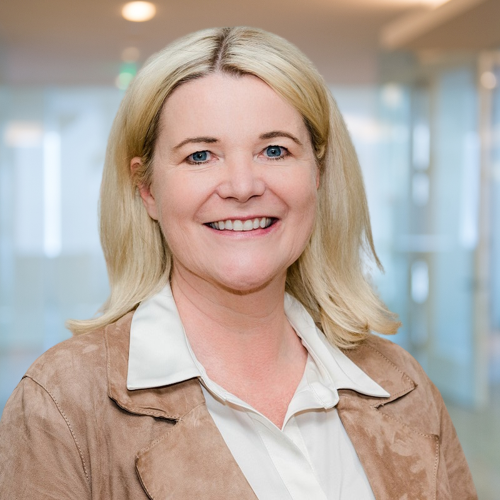
Michèle Gschwend, how did you get into the supply chain department?
The supply chain has accompanied me for more than 25 years, more precisely since the beginning of my part-time doctoral thesis in 1996 on the subject of "strategic outsourcing". I was then given the opportunity to manage various large supply chains in the food and beverage sector, for example for Gate Gourmet's global airline catering, for PepsiCo Europe and the supply chain strategy of Kraft Foods International. I was able to switch from consumer goods to the manufacturing industry and also managed the Europe-wide supply chain at Novelis, formerly Alusuisse. Of course, the topic is still with me now that I have switched to Executive Search.
Has your view of the supply chain changed over the years?
Before the pandemic, the term was mostly not understood at all. Due to the corona pandemic, the invasion of Ukraine and the associated product and energy bottlenecks as well as the highly relevant sustainability issue, the supply chain has suddenly become a major issue for society as a whole. When I first started, I understood the supply chain as an end-to-end value chain and always looked at it holistically at management level. Basically, this is the business model of a company. My definition is not synonymous with logistics or production, but goes beyond it. This view has been gaining ground more and more recently.
How did the change to Executive Search come about?
If you manage complex supply chains in large companies, it's not just about systems, tools and processes, but ultimately always about the cooperation of people. Transformations or cultural changes cannot be carried out if the focus is not on people and the corporate culture. That's why this career change was such a good fit. Today I fill management and board positions. In the past, CEOs mostly talked about business strategies. The supply chain was divided into logistics and production. Now it's an important thing for them too. The supply chain has arrived at the heart of everyday business.
The complexity also seems to have arrived in general everyday life.
Absolutely, the perception has changed. The delivery difficulties caused by the crises have meant that almost every child has heard of the supply chain. When companies can no longer produce what we need on a daily basis and the shelves remain empty, it becomes noticeable. This is why I find the analogy with the chain so important: If just one link in the value chain is broken, the product is missing.
How does Industry 4.0 play into the supply chain?
Everyone is talking about digitization and Industry 4.0, but it is different for every company. There is no universal definition for it. The meaning is industry specific. In production, digitization may refer to the automation of processes. In a hospital, it is more about having the information available not only on paper, but also electronically. If you break all of this down to the supply chain, digitization has always been part of every activity. Finally, data is needed. For as long as computers have existed, people have tried to capture as much data as possible in a system like SAP. Digitization has not only existed since the term «Industry 4.0», but for 25 years or more. Therefore I am of the opinion that companies do not need a digital strategy but need to learn how to best deal with the digital world.
Could you elaborate on that?
I speak in terms of the business model and the value chain. Society has changed. For example, the younger generation in particular only orders online using their mobile phone or laptop, no longer directly in the shop, using fax papers or later sitting at the computer, as was the case before the Internet (1969). It's no use if processes are automated, data is collected and stored, but the shop is not easily accessible via smartphone. You have to learn how customers approach you in the digital world.