“Diversity, inclusion and a sense of belonging are essential factors for improving health outcomes in the UK” comments Karen Daly-Gherabi, Executive Search Partner for the Social Impact Practice. Karen continues “As a multi-cultural society, healthcare professionals must understand the unique needs and challenges faced by different communities. To achieve this and address health disparities, there must be tailored services, lived experience and true representation across the workforce.”
To effectively address health inequalities, promoting diversity and inclusion in the health and care workforce is crucial.
A diverse health and care workforce brings unique perspectives and cultural competencies that are essential in providing quality care to diverse populations. Increasing the representation of underrepresented groups, such as ethnic minorities, LGBTQ+ individuals, and individuals with disabilities, in healthcare professions can help bridge the gap in health disparities. Research suggests that patients are more likely to trust and follow treatment plans from healthcare providers who share their background or have a cultural understanding.
Furthermore, diversity in the healthcare workforce can lead to improved patient outcomes. Studies indicate that diverse healthcare teams can enhance communication, increase patient satisfaction, and reduce healthcare disparities. By fostering diversity in the workforce, healthcare organisations can effectively address the diverse needs and experiences of their patient populations.
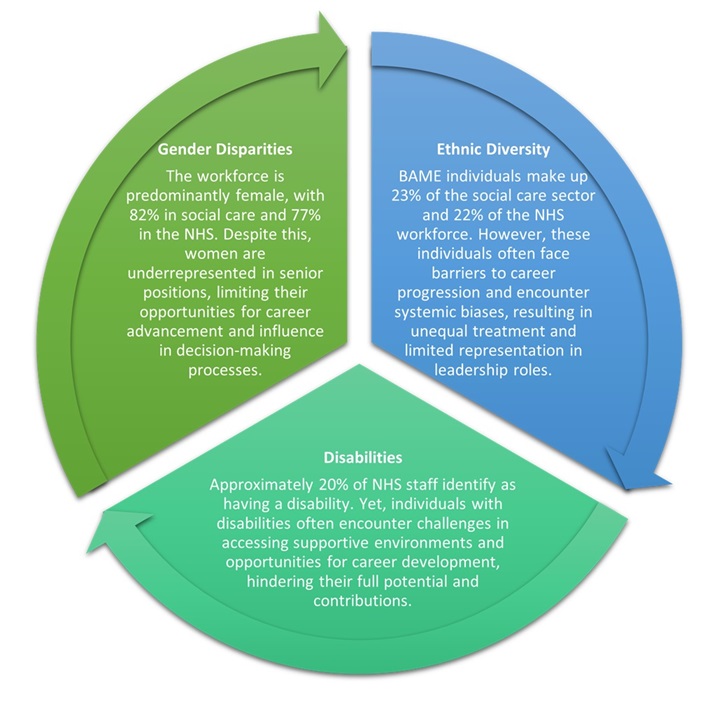
There are green shoots emerging. The NHS Workforce Race Equality Standard shows black and minority ethnic (BME) staff make up almost a quarter of the workforce overall (24.2% or 383,706 staff) – an increase of 27,500 people since 2021 (22.4% of staff).
The number of black and minority ethnic board members across all NHS Trusts has increased to 13.2% in 2022, up from 12.6% the year before, and almost double what it was in 2017 (7%). Additionally, In the past 12 months, BME very senior managers have increased from 9.2% to 10.3% (an increase of 51 – up from 290 in 2021 to 341 in 2022).
Culture is key
High-quality leadership is the cornerstone to developing inclusive workplace cultures that attract and retain staff, providing a safe space so they can be the best they can be, and improve patient outcomes for communities accessing services. Although there are numerous examples of compassionate culture in a workplace, the prevalence of bullying, harassment and inequalities within the health and care sector has plagued the sector. This, coupled with relentless working conditions and long hours, has contributed to a mass exodus, and resulted in the number of individuals working in the health and care sector for fall for the first time.
To improve retention and create a sustainable workforce where health and social care is a better place to work, the sector needs leaders who practise collective, compassionate and inclusive leadership.
Benefits of inclusion in a workplace
Inclusion goes beyond diversity by ensuring that individuals from all backgrounds feel valued, respected, and empowered within the healthcare system. Inclusive healthcare environments foster a sense of belonging and psychological safety for both patients and employees. When healthcare professionals feel included, they are more likely to collaborate, share ideas, and provide comprehensive care.
Inclusion in the health and care workforce also enhances innovation and problem-solving. Diverse perspectives foster creativity and enable the development of new approaches to complex healthcare challenges. By encouraging inclusive practices, healthcare organizations can tap into the wealth of talents and ideas from individuals of various backgrounds, resulting in improved patient care, research, and policy development.
Strategies for promoting diversity and inclusion
To promote diversity and inclusion in the health and care workforce, we can look at several strategies that could be implemented:
- Outreach and Recruitment: healthcare organisations can actively engage with diverse communities to attract individuals from underrepresented groups. Scholarships, mentorship programs, and partnerships with educational institutions can facilitate the recruitment of diverse talent.
- Cultural Competency Training: providing cultural competency training to healthcare professionals is crucial. It equips them with the knowledge and skills needed to understand and address the unique needs of diverse patient populations.
- Bias Awareness and Mitigation: although many organisations are doing this, a more concerted effort is needed to implement strategies to identify and mitigate unconscious biases in hiring, promotion, and patient care. Diversity and inclusion training can raise awareness and help eliminate biases that hinder equitable healthcare practices.
- Supportive Work Environment: creating a supportive and inclusive work environment is essential for retaining diverse healthcare professionals. If diverse hires do not feel valued, it is unlikely to foster a collaborative workforce. Policies promoting work-life balance, diversity affinity groups, and opportunities for professional growth can contribute to a positive workplace culture.
- Leadership Commitment: strong leadership commitment is vital in driving diversity and inclusion efforts. Healthcare organizations should set clear diversity goals, establish accountability measures, and allocate resources to support initiatives that promote inclusivity.
Conclusion
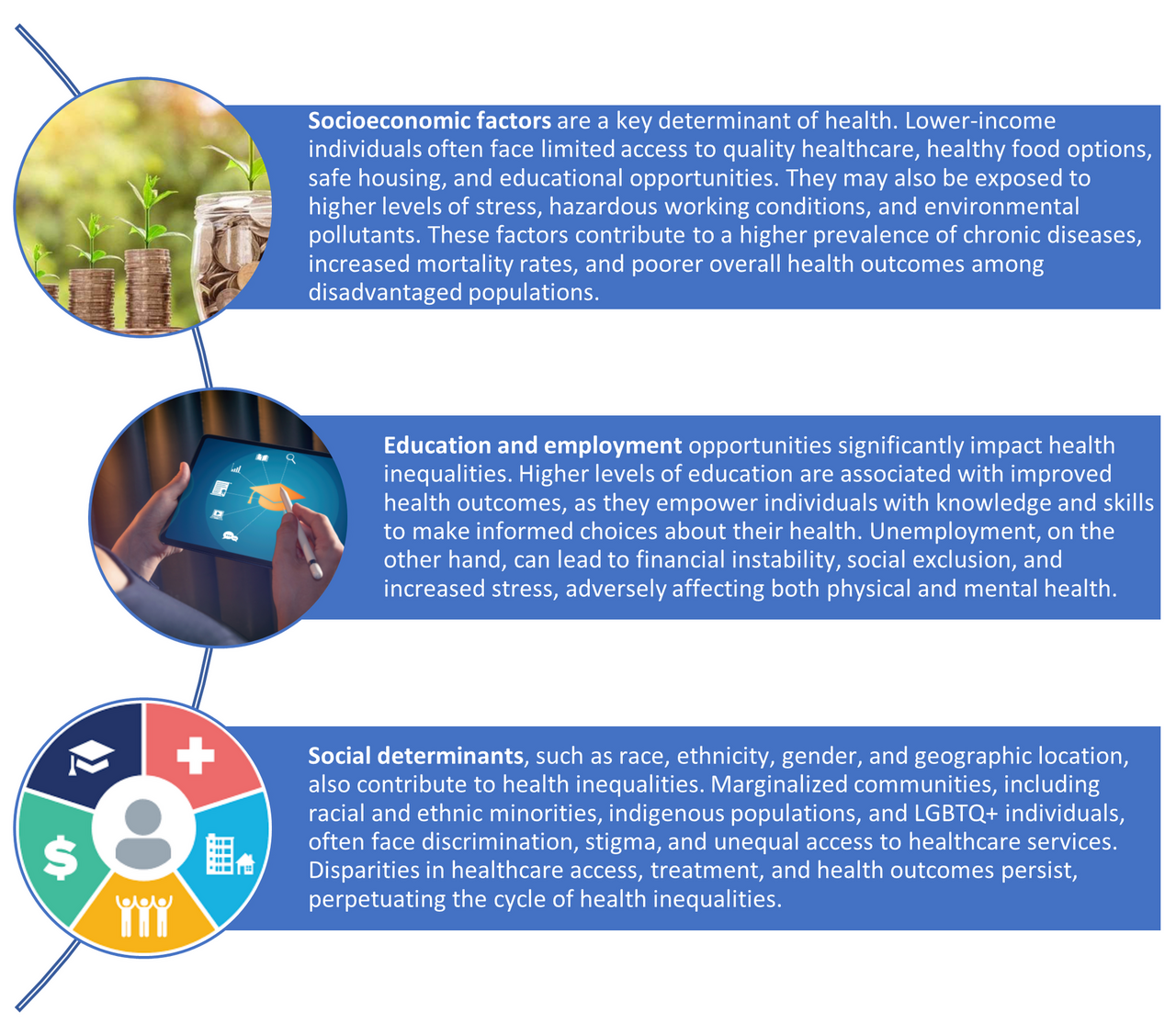
Health inequalities persist as a significant challenge, undermining the well-being and potential of individuals and communities. By understanding the complex web of socioeconomic and social determinants that contribute to these disparities, we can develop targeted strategies to bridge the gap.
They are also deeply rooted in social determinants and systemic barriers. By promoting diversity and inclusion in the health and care workforce, we can begin to address these disparities and work towards a more equitable healthcare system. Diverse healthcare teams enhance patient trust, improve communication, and contribute to better health outcomes. Inclusive environments also foster collaboration, innovation, and enhanced cultural understandings.
To promote diversity and inclusion, healthcare organisations must actively engage in outreach and recruitment efforts, provide cultural competency training, address biases, create supportive work environments, and exhibit strong leadership commitment. These strategies will help create a workforce that reflects the diversity of the populations they serve, ensuring that healthcare is accessible, effective, and culturally sensitive.
By embracing diversity and fostering inclusion, we can build a healthcare system that acknowledges and addresses the unique needs of all individuals. Through collective efforts, we can reduce health inequalities, improve health outcomes, and promote a more just and equitable society for everyone.