Articles & Papers

Boyden Brief Q1 2026: Repositioning Your Career: The Shift from Permanent Executive to Interim Leader

Overview

The transition from a permanent executive role to interim leadership is rarely a straightforward shift. It is not simply a change in contract, but a fundamental repositioning of identity, value and how leadership is delivered. For many executives, stepping into the interim market means letting go of long-term ownership, embracing ambiguity and redefining success in shorter, high-impact engagements.

In our latest Boyden Brief webinar, we explored this transition in depth, bringing together experienced interim leaders to share their perspectives on what it really takes to make the move successfully. From building a credible personal brand and leveraging networks, to navigating financial uncertainty and reshaping leadership style, the discussion highlighted both the opportunities and the challenges that come with operating as an independent executive.

Set against a market that remains active yet increasingly cautious, where decision-making cycles are longer and clients are often balancing cost pressures with transformation and growth agendas, the role of the interim continues to evolve. Demand remains strong across key functions, particularly within finance and commercial leadership, while sectors such as manufacturing are seeing renewed energy despite ongoing headwinds elsewhere.

What emerged most clearly from the conversation was that success as an interim is not accidental. It requires a deliberate shift in mindset: from being part of an organisation to running oneself as a business; from relying on role-based authority to demonstrating immediate, tangible value; and from long-term career planning to continuously building relevance, reputation and relationships.

In this article, we distil the key insights from the discussion, offering practical reflections for executives considering the move into interim and for those looking to refine and strengthen their approach in an increasingly competitive market.
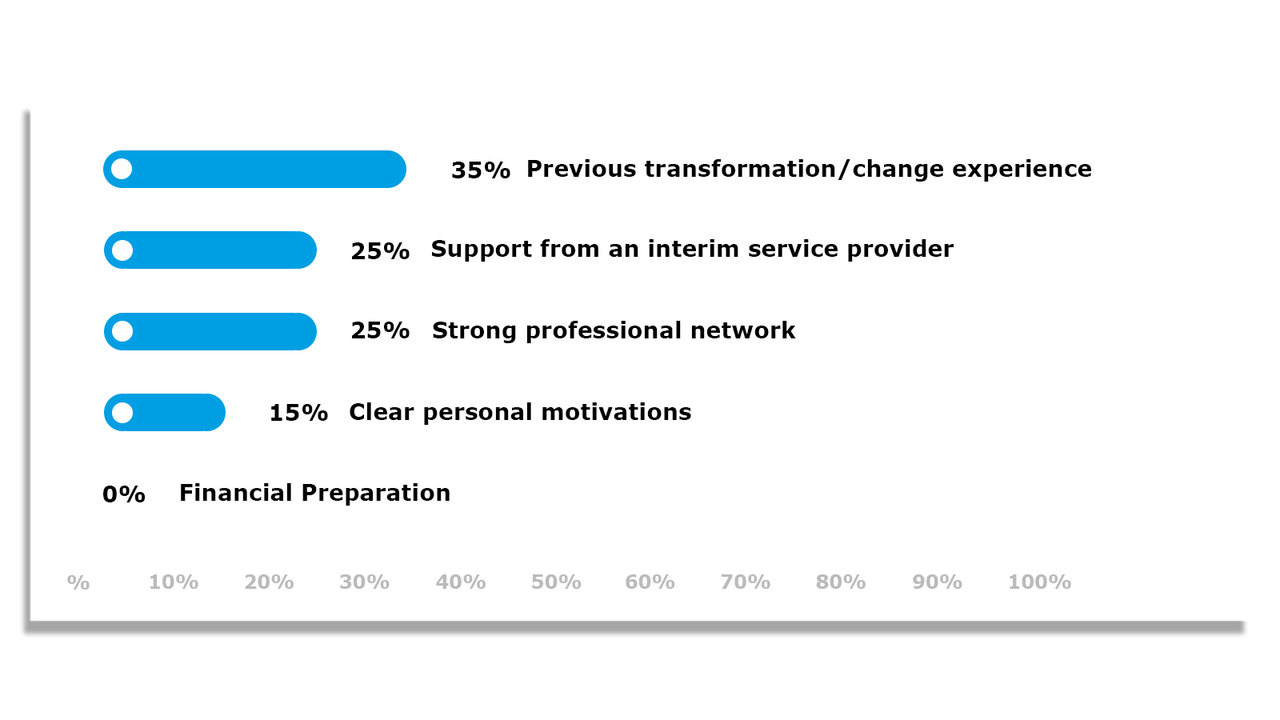
Poll 1: Looking back, what was the most important factor in making your transition successful?

Q1) Looking back, what was the most important factor in making your transition successful? Strong professional network Financial Preparation Previous transformation/change experience Clear personal motivations Support from an interim service provider

A majority of respondents (35%) identified previous transformation/change experience as the most important factor in making their transition successful. Strong professional network and support from an interim service provider were the next most frequently selected responses, each cited by 25% of participants, while clear personal motivations was chosen by 15%. These results suggest that practical experience in leading change is seen as the strongest foundation for a successful move into interim work, supported by the value of trusted networks and external guidance. By contrast, financial readiness appears to be viewed as less important than capability, clarity and access to the right support structure.

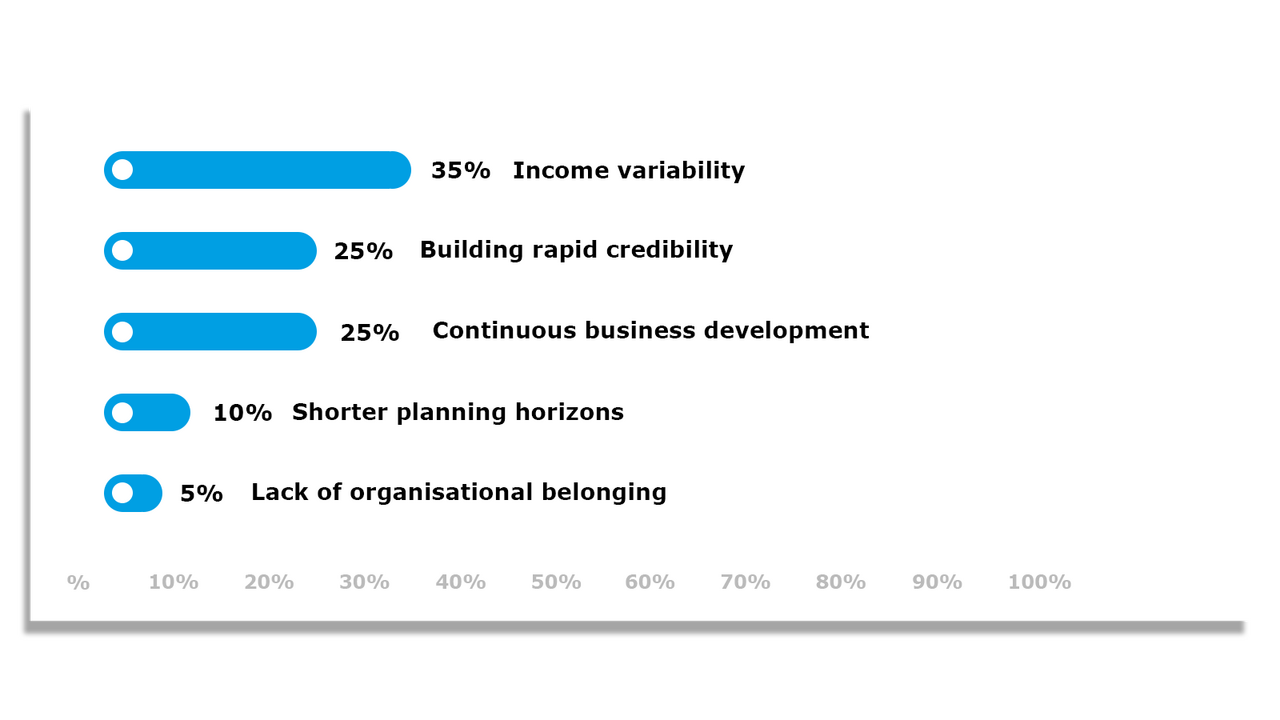
Poll 2: What was your biggest adjustment in the first year as an interim?

Q2) What was your biggest adjustment in the first year as an interim? Income variability Building rapid credibility Lack of organisational belonging Shorter planning horizon Continuous business development

The most commonly cited adjustment in the first year of interim work was income variability, selected by 35% of respondents. A further 25% pointed to building rapid credibility, while the same proportion highlighted the challenge of continuous business development. Smaller numbers identified shorter planning horizons (10%) and lack of organisational belonging (5%) as the main shift. Taken together, the responses show that moving into interim leadership is not only an operational change but a personal and commercial one. Beyond delivering in role, executives must adapt to a more fluid working model, where financial uncertainty, reputation-building and maintaining future opportunities all become part of the day-to-day reality.

Poll 3: What did you underestimate most about your Interim work?

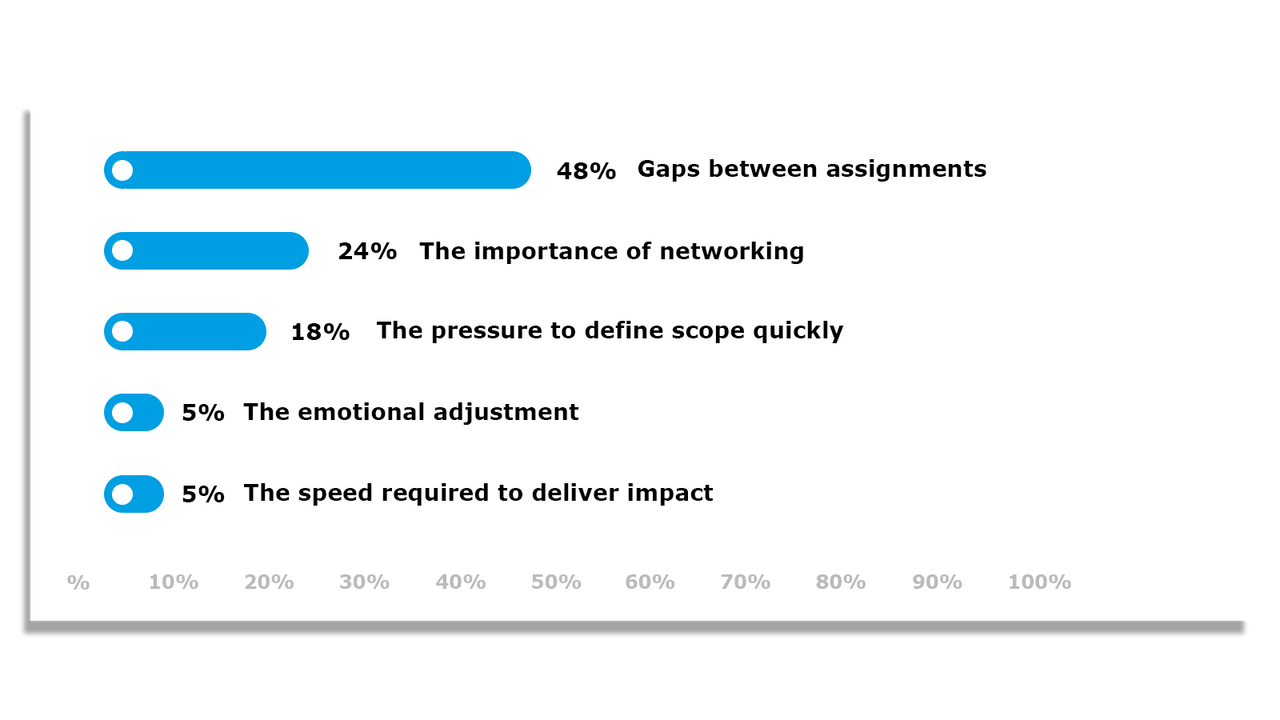
Q3) What did you underestimate most about your Interim work? The importance of networking The speed required to deliver impact The pressure to define scope quickly The emotional adjustment Gaps between assignments

Nearly half of respondents (48%) said the aspect they had most underestimated about interim work was gaps between assignments, making it the most prominent response by a clear margin. This was followed by the importance of networking at 24%, while the pressure to define scope quickly was selected by 18%. Far fewer respondents pointed to either the speed required to deliver impact or the emotional adjustment, with both receiving 5%. The pattern suggests that what surprises many new interims is not only the pace of delivery inside an assignment, but the reality of life between roles. In particular, the findings highlight how much interim careers depend on continuity of pipeline, relationship-building and comfort with periods of uncertainty, rather than on delivery capability alone.

Poll 4: What skill became critical only after you moved to Interim?

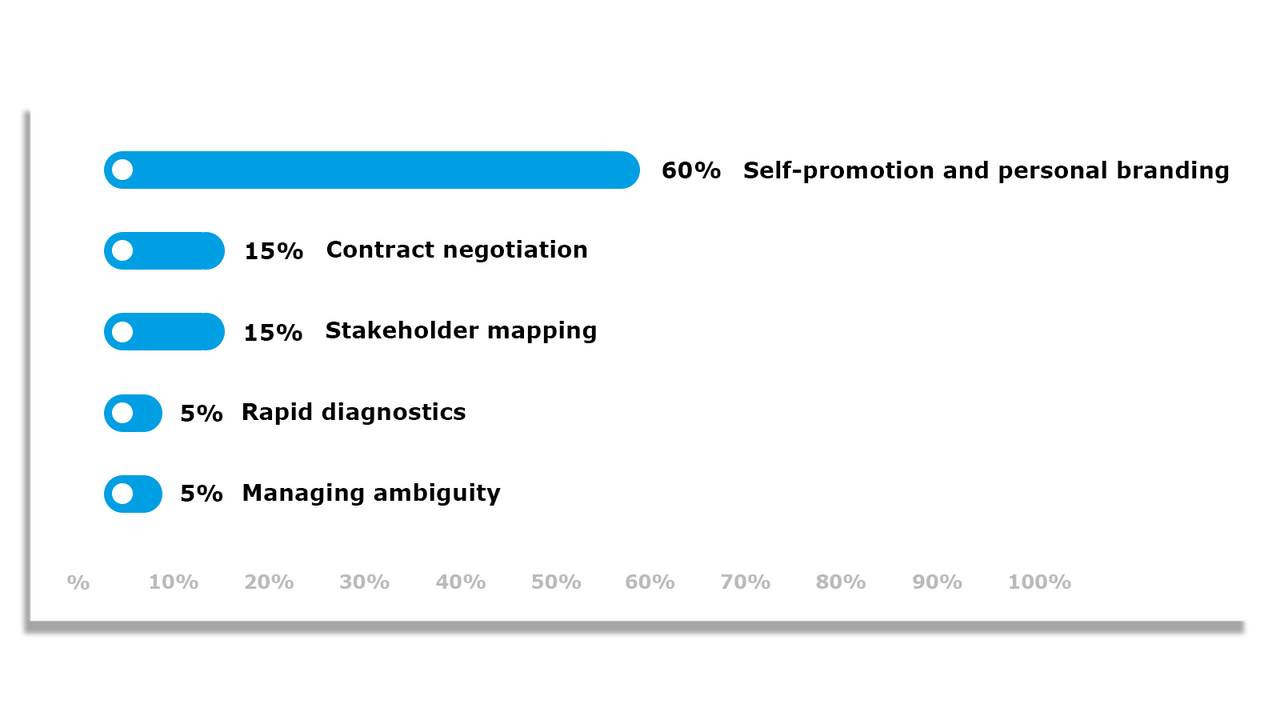
Self-promotion and personal branding Contract negotiation Rapid diagnostics Managing ambiguity Stakeholder mapping

The results point to one skill standing well above the rest: self-promotion and personal branding, cited by 60% of respondents as the capability that became critical only after moving into interim work. By contrast, contract negotiation and stakeholder mapping were each selected by 15%, while rapid diagnostics and managing ambiguity received 5% apiece. This suggests that the transition into interim leadership requires more than operational expertise alone. For many executives, the real shift lies in learning how to position themselves clearly in the market, articulate their value quickly and remain visible between assignments. In other words, success in interim work depends not just on being able to deliver, but on being able to communicate why you are the right person to deliver it.

Poll 5: What would you have done differently when making the move?

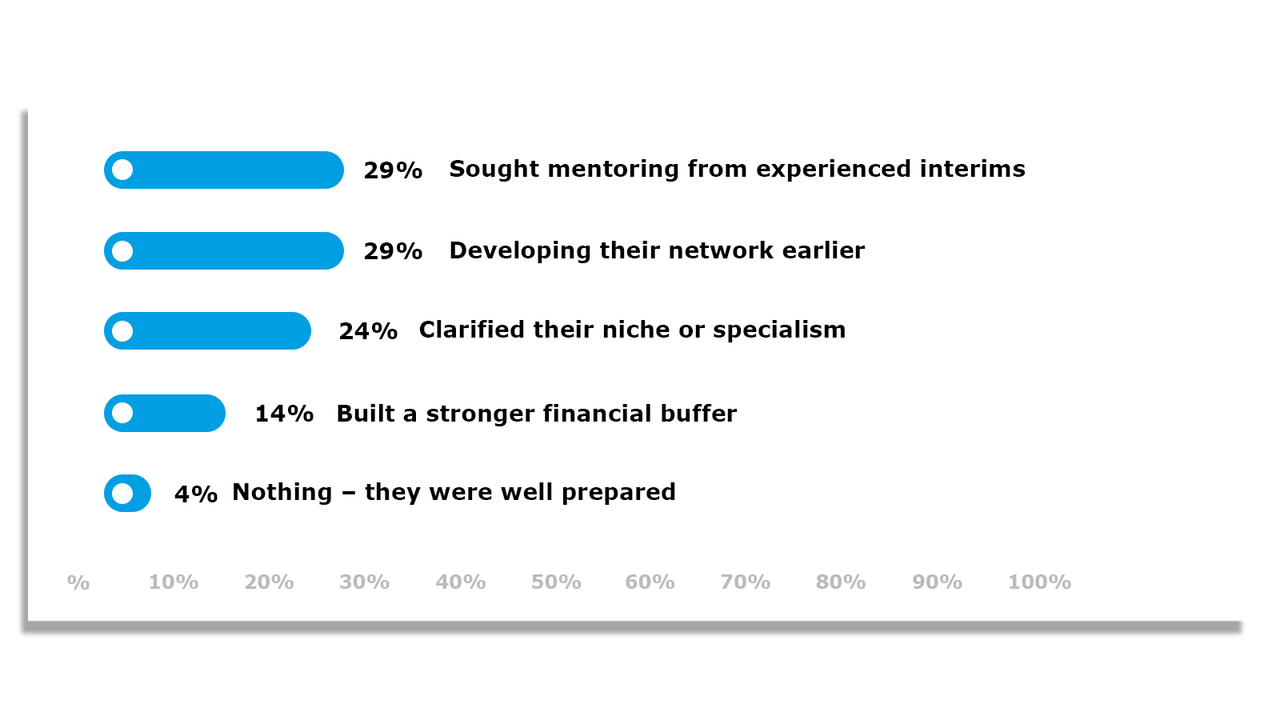
Q5) What would you have done differently when making the move? Built a strong financial buffer Clarified my niche/specialism Sought mentoring from experienced interims Developed my network earlier Nothing – I was well prepared

In reflecting on what they would have done differently, respondents most often pointed to seeking mentoring from experienced interims and developing their network earlier, with both options selected by 29%. A further 24% said they would have clarified their niche or specialism sooner, while 14% would have built a stronger financial buffer before making the move. Only 4% felt they were well prepared and would not have changed anything. The responses suggest that, with hindsight, many executives see the transition into interim work as something that could have been navigated more strategically. In particular, earlier investment in relationships, clearer market positioning and guidance from those already established in the space appear to be the factors most likely to smooth the move from permanent leadership into an interim career.

Poll 6: What has been the biggest professional benefit of moving to Interim?

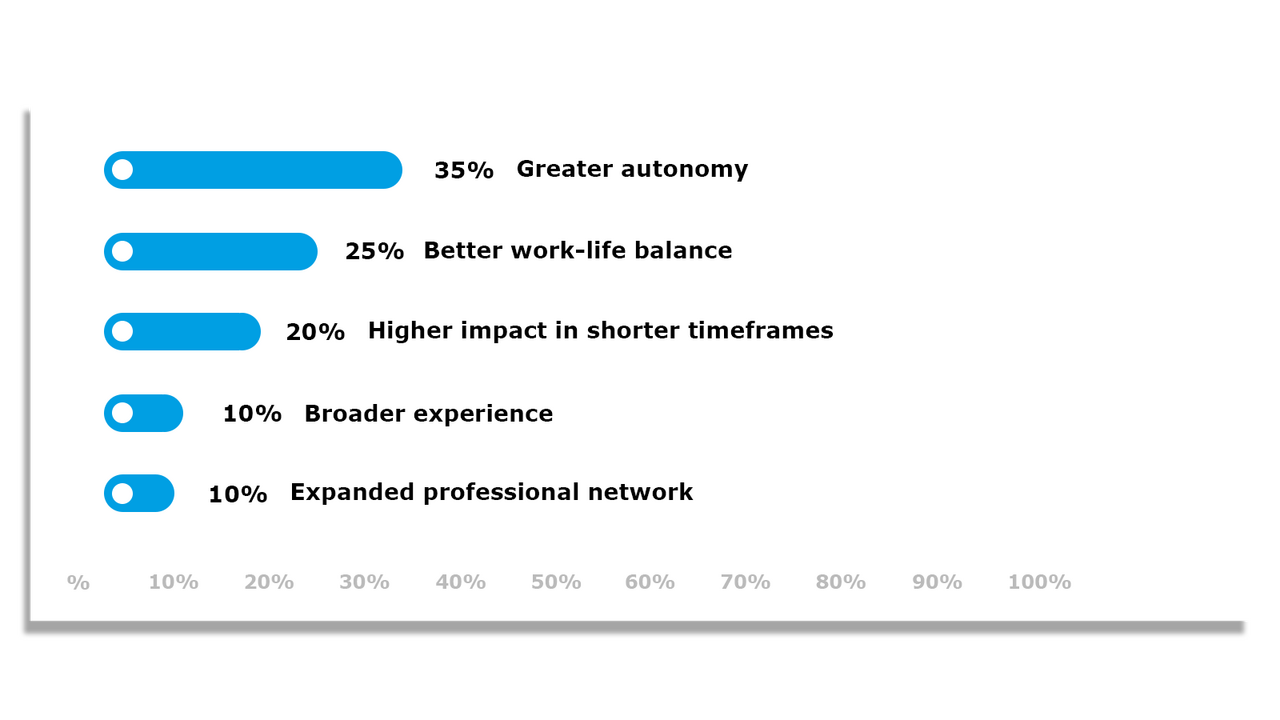
Q6) What has been the biggest professional benefit of moving to Interim? Broad experience Greater autonomy Higher impact in shorter timeframes Better work-life balance Expanded professional network

When asked about the biggest professional benefit of moving into interim work, respondents most often pointed to greater autonomy, selected by 35% of the group. Better work-life balance followed at 25%, while higher impact in shorter timeframes was cited by 20%. Smaller shares identified broader experience and an expanded professional network, both at 10%. The responses suggest that the appeal of interim leadership lies not only in variety, but in the ability to work with greater independence and sharper focus. For many, the move appears to offer a more intentional way of working, combining autonomy and pace with the opportunity to deliver meaningful outcomes without the longer-term constraints often associated with permanent executive roles.

From Long-Term Leadership to Immediate Impact: Insights from the Interim Community

One of the clearest themes to emerge from the discussion was that moving from a permanent executive role into interim leadership is not simply a change in contract type, it is a change in positioning, mindset and operating model.

Across the conversation, several themes stood out:

1. Interim Leadership Requires a Different Value Proposition

Many executives coming from permanent roles are accustomed to describing their experience through scale, tenure and functional leadership. In contrast, interim opportunities often depend on being able to articulate immediate value in sharper and more outcome-oriented terms.

The discussion suggested that executives looking to enter the interim market need to answer a more direct set of questions:

  • What business problem do you solve?
  • In what context are you most effective?
  • What results can you deliver in a limited timeframe?
  • Why should a client trust you to create impact quickly?

2. Credibility Matters More Than Ever

Interim appointments are often made under time pressure, which means credibility has to be established quickly. Participants noted that executives transitioning from permanent roles need to think carefully about how they present themselves to the market, both on paper and in conversation.

This includes:

  • Demonstrating relevant transformation or change experience
  • Showing evidence of delivery, not just responsibility
  • Positioning themselves around outcomes rather than hierarchy
  • Being realistic about where their background is strongest

3. Network, Visibility and Market Understanding Are Critical

Another strong theme was that successful transition into interim work depends heavily on market visibility and relationships. Unlike permanent search processes, interim opportunities can move quickly and often depend on timing, reputation and trusted referrals.

As a result, executives exploring the shift may need to invest more intentionally in:

  • Reconnecting with their network
  • Clarifying how they want to be known
  • Engaging with the interim search community
  • Understanding the types of roles and environments where they are most credible


Conclusion

Repositioning from a permanent executive to an interim leader is ultimately a shift in mindset as much as it is a career move. It requires individuals to redefine how they create and communicate value, how they manage risk and how they sustain momentum over time.

What this discussion made clear is that there is no single path into interim but there are common characteristics among those who succeed. Clarity of proposition, strength of network and consistency of delivery all play a central role, underpinned by a willingness to continuously adapt. In an environment where clients are increasingly selective and expectations are high, interims must not only demonstrate expertise, but also confidence in what they offer and where they can make the greatest impact.

At the same time, the market presents significant opportunity. As organisations navigate cost pressures, transformation agendas, and the need for new revenue streams, the demand for experienced, flexible leadership remains strong. For those willing to embrace the realities of the model, operating as a business, investing in their brand and staying close to the market, the interim path can offer both professional challenge and long-term reward.

Looking ahead, the evolution of the interim market will continue to be shaped by both client expectations and the calibre of talent entering it. For executives considering the move, the message from the community is clear: success is less about making the transition and more about how deliberately and strategically it is approached.

This website uses cookies to ensure you get the best experience on our website. Learn more