Articles & Papers

CEE Executive Mobility 2026: What’s Driving Movement Across the Region

Perspectives from 30 senior executives on relocation decisions and leadership mobility across CEE

The Future of Executive Mobility

Topics:

  • More selective use of expatriates
  • Development of local leadership pipelines
  • Knowledge transfer as a key expatriate role
  • Generational differences in mobility
  • Hybrid leadership models

The survey findings suggest that executive mobility is entering a new phase. While international experience continues to be highly valued, organisations are becoming increasingly strategic in how they deploy expatriate leaders and develop future executive teams.

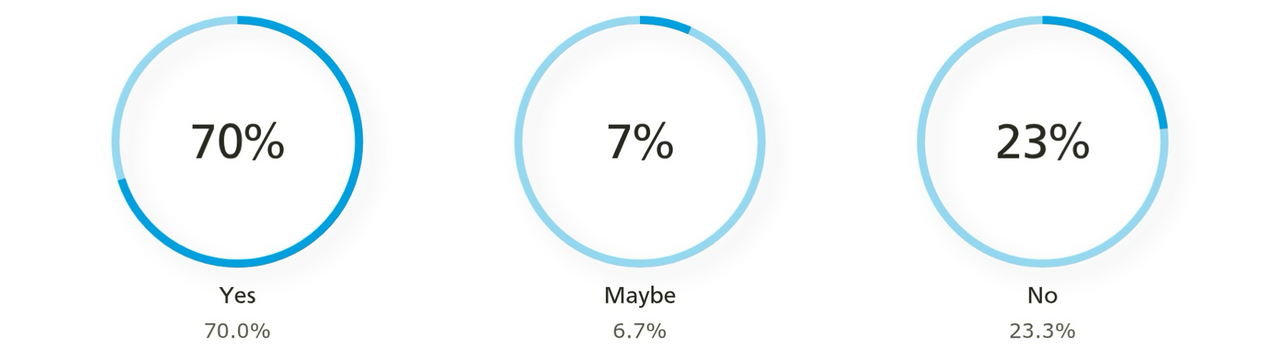
Executives themselves remain open to future relocation opportunities. Most respondents indicated that they would consider another move within the region, provided that the career opportunity was compelling, the organisation offered strong support, and the relocation was also supported by their families.


Do you see yourself to be open to another move within the CEE region within the next 3 years?

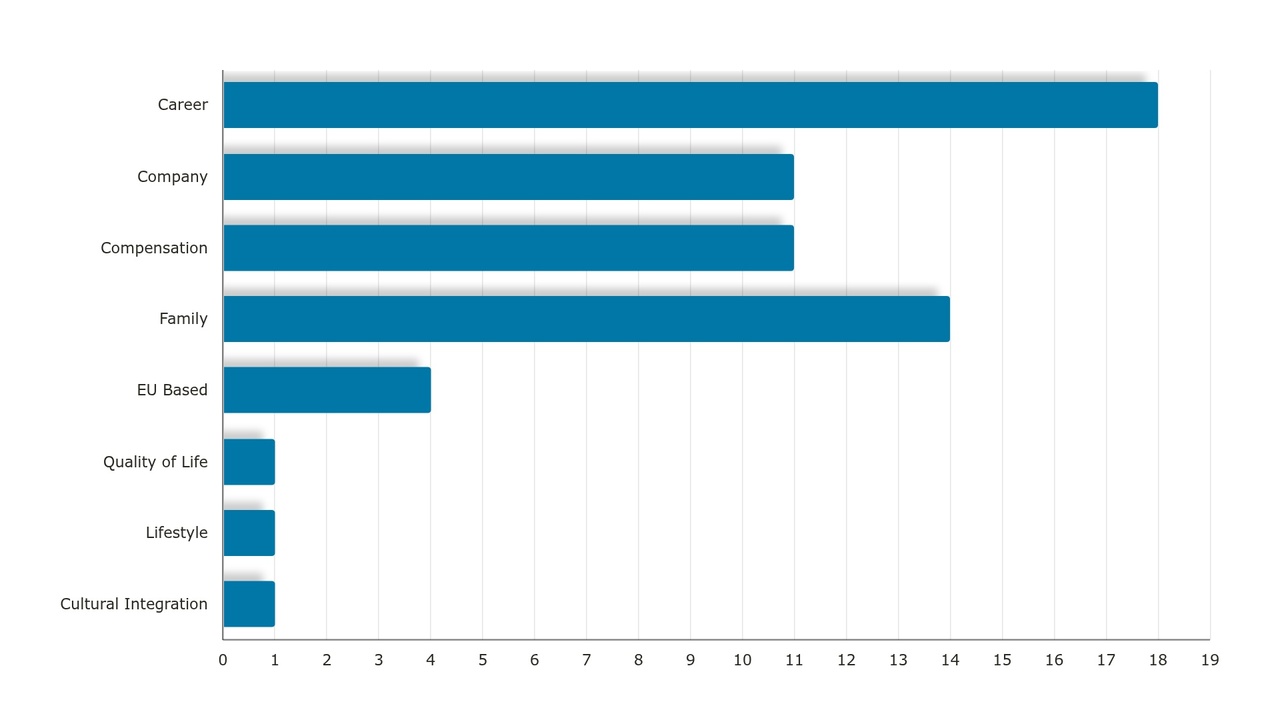
What would most influence your decision to move again?

The factors most likely to influence executives’ decisions to relocate again are strongly centered around professional opportunity and family considerations. Career advancement emerged as the dominant driver, selected by 64.3% of respondents, highlighting the continued importance of mobility as a catalyst for leadership growth. Family considerations followed closely, cited by 50%, underscoring the central role of family readiness and support in relocation decisions. Company‑driven factors and compensation were each identified by 39.3%, indicating that organisational commitment and competitive packages remain important but secondary to broader professional and personal motivations. A smaller share of respondents (14.3%) noted that being based within the EU would influence their willingness to move, while only 3.6% referenced quality of life, lifestyle, or cultural integration. Overall, the data reflects that while incentives and location characteristics matter, executives primarily relocate for compelling career opportunities—provided their families are equally positioned for a successful transition.

A More Selective Approach to Expatriate Assignments

Many organisations are becoming more selective in the use of expatriate leaders. Rather than deploying expatriates widely across markets, companies are increasingly reserving international assignments for roles where global experience, knowledge transfer, or strategic oversight can deliver clear value.

Executives noted that expatriate leaders today are expected to deliver measurable strategic impact. In particular, companies expect expatriates to:

  • Transfer knowledge and best practices
  • Develop local leadership capabilities
  • Build strong local teams
  • Adapt quickly to local cultural and business environments


Mobility as a Leadership Development Tool

Despite some reductions in travel budgets and fewer inter-company transfers in certain organisations, international mobility continues to play an important role in leadership development.

Executives consistently highlighted that candidates with international experience often demonstrate:

  • broader strategic perspective
  • cultural intelligence
  • adaptability and resilience

As a result, individuals who have worked across borders may be viewed as stronger candidates for senior leadership positions (particularly multi-country or regional positions).

Within many organisations, the willingness to relocate or take on international assignments is also seen as a signal of leadership potential.

At the same time, several interviewees cautioned that appointing expatriate leaders is not always the optimal solution, particularly in industries where deep local knowledge, regulatory understanding, and established relationship networks are critical for success. Over the past three decades, many markets across Central and Eastern Europe have developed strong pools of talented professionals who have progressed into senior leadership roles within both local and international organisations.

Companies are increasingly mentoring and preparing local employees to assume senior leadership roles, both within their domestic markets and internationally. This approach can reduce costs, strengthen long-term employee engagement, and ensure stronger alignment with local market dynamics.

As a result, organisations appear to be moving toward a balanced leadership model, combining selective expatriate assignments with the development of strong local leadership capabilities.


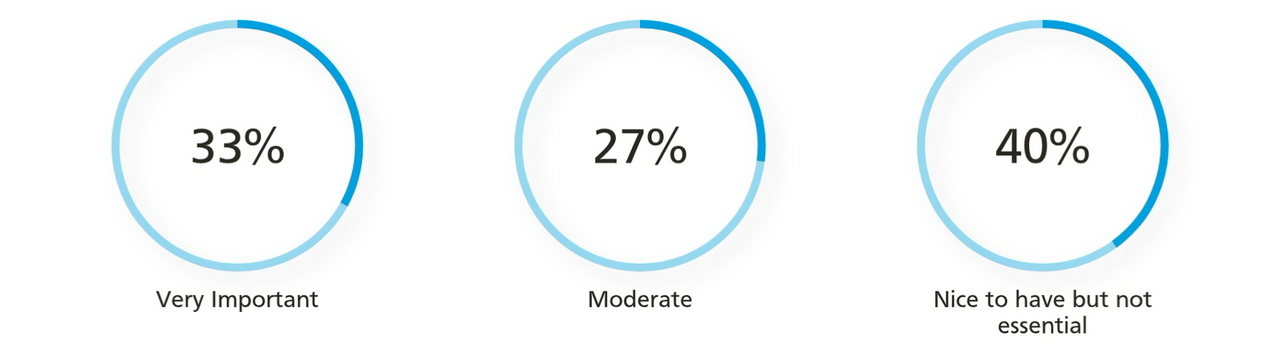
When selecting executive leaders for your team, how important is it for you/your organisation to see that the candidate has travelled extensively from a professional perspective?


A chart titled “When selecting executive leaders for your team, how important is it for your organisation to see that the candidate has travelled extensively from a professional perspective?” based on 30 responses. The chart is divided into three segments: 40% labeled “Nice to have but not essential” shown in orange, 33.3% labeled “Very Important” shown in blue, and 26.7% labeled “Moderate” shown in red. The legend on the right lists the three categories with corresponding colours.

Evolving Expectations of Expatriate Assignments

The structure of expatriate packages has also evolved in recent years.

Traditional expatriate packages often included extensive benefits such as housing allowances, schooling support, healthcare coverage for the entire family, and regular travel allowances.

Today, organisations increasingly differentiate between international and localised compensation packages, with some companies encouraging executives to transition to local terms more quickly.

Executives also highlighted the importance of repatriation planning, noting that returning to the home country after an international assignment can sometimes be as challenging as the initial relocation.


Generational Differences in Mobility

The willingness to relocate varies across career stages and personal circumstances.

Younger professionals are generally more open to international assignments, often viewing them as opportunities for career development and personal growth.

However, once executives establish families, mobility decisions can become more complex. Schooling, partner careers, and family stability often play a decisive role in determining whether relocation is feasible. Equally, those experienced expatriates with adult children displayed a high degree of openness to relocation.

Some interviewees also questioned whether younger generations may prioritise shorter career experiences and more frequent job changes rather than long-term international career paths within a single organisation.


Emerging Destinations

During the period that the survey was conducted, Asia, followed by the Middle East, were identified as the most exciting and desirable international destinations for professional and career opportunities among participating executives. However, given recent events in the Middle East this is almost certain to have changed in at least the short to medium term. Within the CEE region, Poland was also regarded as a rapidly emerging and attractive destination, due to its consistently strong economic performance and market potential. Cost of living and quality of life were also cited as attractions.


Key message:

Organisations are moving toward a balanced leadership model, combining targeted expatriate assignments with stronger development of local executive talent.

Organisations that approach executive mobility strategically — combining targeted expatriate assignments with the development of strong local leadership pipelines — will be best positioned to attract, integrate, and retain leadership talent across Central and Eastern Europe.

 

This website uses cookies to ensure you get the best experience on our website. Learn more