Executive Brief

President & General Manager, British Columbia Rapid Transit Co. Ltd.
TransLink

May 2022

Organizational Profile

About TransLink

Overview

Together with their partners, stakeholders, and operating companies, TransLink plans and manages the region’s transportation system. They are dedicated to creating and sustaining a transportation system that meets the needs of customers, residents, businesses, and goods movers in a way that protects the environment and supports the economic and social objectives of the region.

Officially recognized as the South Coast British Columbia Transportation Authority, most simply know them as TransLink. Created in 1999, they deliver their services through contractors, and their operating companies and subsidiaries such as Coast Mountain Bus Company, British Columbia Rapid Transit Company Ltd. (SkyTrain), Metro Vancouver Transit Police and West Coast Express Ltd.

Customer Promise

To always put you first — your safety, your time, and your connection to the people and places that matter the most.

Vision, Mission, and Values

A better place to live built on transportation excellence.

Mission

Together, we connect the region and enhance its livability by providing a sustainable transportation network, embraced by the communities we serve.

Values

We are committed to the following pillars that support our vision and mission.

Safety - The safety and security of our customers and employees is paramount. We will operate safely at all times.

Customer Service - We will provide excellent service to our customers. We understand that our customers expect timeliness and reliability and delivering on those expectations is essential to our operations. Our plans and actions will be driven by customer needs

People - We value our employees and the contributions they make to serve our customers.

Inclusiveness - We value teamwork and partnerships. We recognize that our success depends on effective communication and consultation with our employees, our stakeholders and the public. We will always act honestly and with integrity. We will treat others with dignity and respect and will conduct ourselves in a manner that will instill and foster trust.

Excellence - We will strive for excellence in all that we do and will be a leader in enhancing sustainability through the transportation services we provide. We will encourage innovation and the implementation of best practices throughout our organization.

Sustainability - Sustainability will be a key factor in all our strategies, business plans, decisions and operations. We will incorporate economic, environmental and social factors in our decision making.

Accountability - We will be results oriented and fiscally responsible. We will set measurable targets and hold ourselves accountable to achieve them.

Business Overview

Public Transit

TransLink’s regional transit system spans 21 municipalities, as well as the Tsawwassen First Nation and Electoral Area ‘A’. Their service area covers more than 1,800 square kilometres – that’s over twice the size of Canada’s five other largest cities.

From road to rail to marine, combined, TransLink carries an average of more than 500,000 customers each day and currently employs more than 7,700 staff.

Major Road Network

The Major Road Network (MRN) supports the safe and efficient movement of people and goods across the region. It includes 675 kilometres of major arterial roads that carry commuter, transit, and truck traffic. The Major Road Network connects the provincial highway system with the local road network, and some corridors also serve cyclists and pedestrians.

TransLink, in partnership with municipalities, plans the region's Major Road Network. TransLink contributes funding for the on-going operation, maintenance and rehabilitation of the MRN, but ownership and operational responsibility for the MRN remains with the respective municipalities. TransLink also shares the cost of road, cycling, and pedestrian improvement projects with municipal partners and other stakeholders, in order to expand options for driving, cycling, and walking across the region.

Operating Companies

TransLink is responsible for planning, financing and managing transportation modes and services in the Metro Vancouver region. Their services are delivered, in conformance with TransLink’s policies and plans, through operating companies and contractors:

British Columbia Rapid Transit Company

BCRTC operates SkyTrain and West Coast Express (WCE) services.

Coast Mountain Bus Company

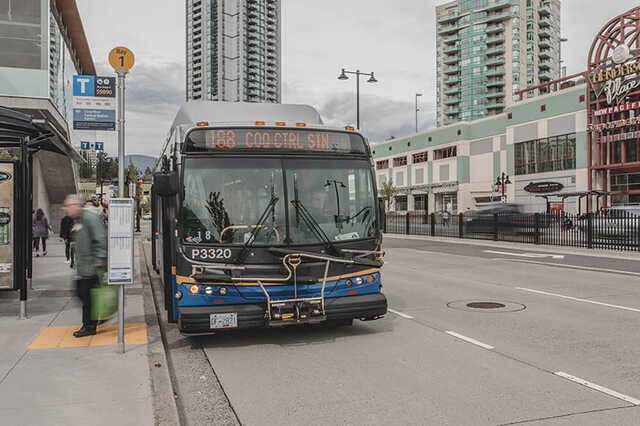
Operates the SeaBus and over 96% of the region's bus service.

West Coast Express

West Coast Express runs the commuter rail service from Vancouver to Mission.

Transit Police

Delivers policing services to the multiple modes of the transit system.

About British Columbia Rapid Transit Company and West Coast Express

British Columbia Rapid Transit Company Ltd. (BCRTC), a TransLink subsidiary, maintains and operates two of the three SkyTrain lines in Metro Vancouver — the Expo Line and the Millennium Line. West Coast Express, a BCRTC subsidiary, operates the commuter rail service between Vancouver and Mission City.

Both SkyTrain lines operate out of BCRTC's Operations and Maintenance Centre in Burnaby. BCRTC has more than 1,100 dedicated staff who work in the areas of administration, engineering, elevator and escalator maintenance, field and train operations, scheduling, vehicle maintenance, and wayside (station and guideway) maintenance.

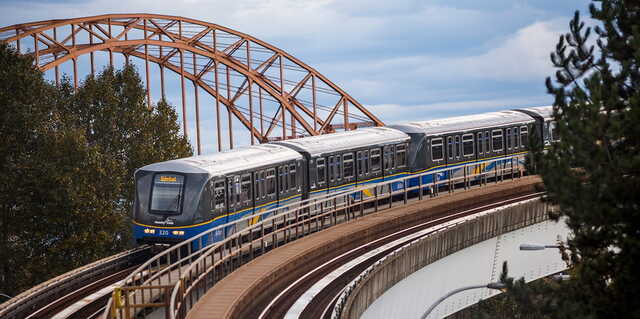
BCRTC also manages the agreement with InTransitBC for the operation and maintenance of the Canada Line. Currently serving about 350,000 passengers per weekday, the Expo and Millennium SkyTrain Lines connect Downtown Vancouver with the cities of Burnaby, New Westminster, Coquitlam, Port Moody, and Surrey, while the Canada Line connects Downtown Vancouver to the Vancouver International Airport (YVR) and the city of Richmond. The SkyTrain runs on a mostly elevated guideway, high above city streets, though there are a few stations located underground. The name SkyTrain is derived from these views of Metro Vancouver our commuters enjoy during their journey.

Fleet and Technologies

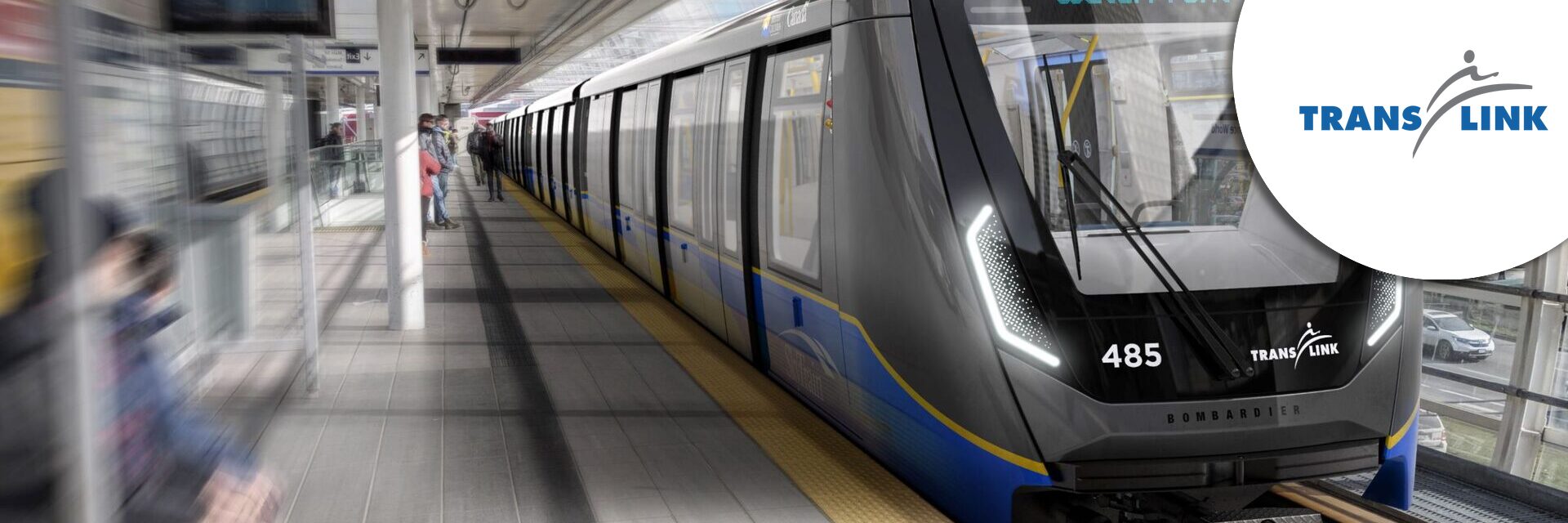
SkyTrain represents a modern family of automated rapid transit systems also known as Advanced Rapid Transit (ART).  The current SkyTrain system operates 342 automated rail cars on 78.5 kms of elevated guideway and tunnels. WCE operates 44 conventional passenger rail cars in up to five trains.

History of the SkyTrain

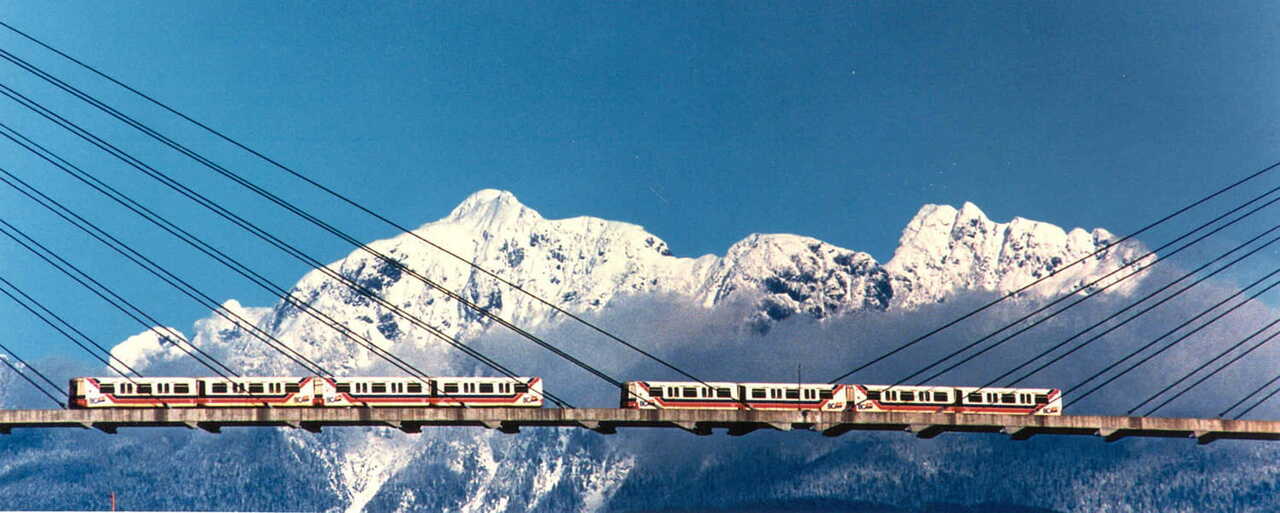
SkyTrain first opened on December 11, 1985 for eight days of free service prior to officially starting revenue service in January 1986 as a showcase of Expo ‘86, with its first line, the appropriately named Expo Line. The Millennium Line joined the service starting in January 2002 with two stations. Now, it has 17 stations connecting key hubs in the area. Our latest addition to SkyTrain was the Evergreen Extension of the Millennium Line which opened in 2016, adding six stations and connecting the cities of Coquitlam and Port Moody to the network.

System Expansion

As an essential part of the transit system within Metro Vancouver, SkyTrain is growing and will serve more communities soon. The Broadway Subway is a 5.7km extension of the existing Millennium Line past its current terminus at VCC-Clark reaching as far west as Arbutus. Work on the extension began in fall 2020, with completion scheduled for 2025 bringing six extra stations to the line.

By 2028, it is planned to add an additional 23.4 kms of automated rail guideway, 14 new stations, and 205 new automated rail cars to the SkyTrain system.  The planned expansion will require an increase in permanent BCRTC employment of approximately 30% compared to current staffing levels.

BCRTC and WCE Governance and Management

Governance Model

BCRTC’s and WCE’s Boards are appointed by and are accountable to the TransLink Board. They are responsible for ensuring the overall effectiveness and efficiency of BCRTC’s and WCE’s performance and that all statutory requirements are met. The TransLink Chief Executive Officer (CEO), who is appointed by and accountable to the TransLink Board, is the designated TransLink representative responsible for facilitating and supporting the governance relationship between the TransLink Board, BCRTC and WCE.

BCRTC’s President and General Manager works with the TransLink CEO on a regular basis on operational, capital program and financial issues and to align subsidiary operations with the TransLink strategic plan and enterprise priorities.

BCTRC and WCE Boards of Directors

Chris Lythgo, Board Chair

Steven Hunt, Board Member

Christine Dacre, Board Member/CFO, TransLink

Executive Team

TBD, President & GM

Mike Richard, Vice President, Operations

Dan Savitsky, Vice President, Maintenance

Tracy Bolognese, Executive Director of Finance and Corporate Services

TransLink Governance & Management

Governance Model

TransLink, officially the South Coast British Columbia Transportation Authority, is a regional transportation authority created by the South Coast British Columbia Transportation Authority Act.

Governance

Under the South Coast British Columbia Transportation Authority Act (the Act), TransLink has a governance structure that includes: the TransLink Board of Directors, the Mayors’ Council on Regional Transportation, and subsidiary boards. The TransLink Board has the responsibility and the mandate to make decisions in the interest of TransLink within the limits established by the Act.

TransLink Board of Directors

TransLink's Board of Directors is responsible for overseeing TransLink’s management of affairs. For details on what the Board is responsible for, and how their governance is structured, visit their Governance Model page.

Board Members

Lorraine Cunningham, Board Chair

Andy Ross, Vice Chair

Jennifer Chan

Sarah Clark

Jonathan X. Coté

Harj Dhaliwal

Jack Froese

Karen Horcher

Andrea Reimer

Harpinder Sandhu

Marcella Szel

Mayors’ Council on Regional Transportation

The Mayors’ Council on Regional Transportation (Mayors’ Council) is the collective voice of Metro Vancouver residents on transit and transportation. Their members include representatives from each of the 21 municipalities in TransLink’s service area, as well as the Tsawwassen First Nation and Electoral Area 'A'.

The Mayors’ Council has a range of responsibilities.  It approves long-term transportation plans prepared by TransLink including transportation service levels, major capital projects, and regional funding and borrowing limits. It also oversees and regulates short-term fares, customer surveys and complaint processes, sale of major facilities and assets, and director and executive compensation levels.

For details on the Mayors’ Council responsibilities and how governance is structured, visit the Governance Model page and the Mayors’ Council's Website.

Mayors’ Council Members

Jonathan X. Coté, Chair

Jack Froese, Vice Chair

Gary Ander

Chief Ken Baird

Jamie Ross

Mary-Ann Booth

Malcolm Brodie

Linda Buchanan

Bill Dingwall

George Harvie

Mike Hurley

Mike Little

Doug McCallum

Jen McCutcheon

John McEwen

Ron McLaughlin

Mike Morden

Kennedy Stewart

Richard Stewart

Rob Vagramov

Val van den Broek

Darryl Walker

Brad West

TransLink Senior Executive Team

The senior executive team brings a diversified set of skills to the tasks of planning and managing the region's transportation network.

Kevin Quinn, Chief Executive Officer, TransLink

Gigi Chen-Kuo, Chief Operating Officer, TransLink

Christine Dacre, Chief Financial Officer, TransLink

TBD, President & General Manager, BC Rapid Transit Company

Michael McDaniel, President & General Manager, Coast Mountain Bus Company

Dave Jones, Metro Vancouver Transit Police

Steve Vanagas, Vice President of Customer Communications and Public Affairs

Annabelle Donovan, Vice President of Human Resources

Learn more about the TransLink Executives, here.
 

TransLink Policies, Plans & Corporate Reports

Environmental & Sustainability Policy

TransLink is committed to fostering the development of a sustainable transportation system that aims to meet the needs of people, organizations, and businesses, and promotes the ecological, economic and social well-being of Metro Vancouver and beyond.

Their Sustainability Policy articulates TransLink’s commitment to making sustainability a key factor in all their strategies, plans, business practices, decisions, and operations.

Additionally, TransLink has released its Climate Action Strategy (TransLink Climate Action Strategy - January 2022) which details how it will achieve a climate-resilient and net-zero public transportation system.

Customer Experience Action Plan

TransLink has made customer experience one of their top enterprise-wide priorities. Providing Metro Vancouver with a high-quality customer service experience is at the heart of everything TransLink does, and key to creating a more liveable region.

The 2019-2025 Customer Experience Action Plan includes both existing and ongoing initiatives, as well as new and potential initiatives that have emerged from customer feedback. TransLink’s Customer Experience Action Plan is built on three pillars (Services, Information, and People), each containing a series of initiatives supported by specific and tangible actions (Page 14 of Action Plan). In this way, TransLink can measure, monitor and track their progress moving forward.

Financial Reports

As the integrated, multi-modal transportation authority for Metro Vancouver, TransLink plans, finances and operates the transportation network to help meet the unique needs of this region.

For the nine months ended September 30, 2021, TransLink recorded a deficit of $154.6 million based on Public Sector Accounting Board (PSAB) Standards, of which $211.7 million is due to Senior Government Relief Funding budgeted in 2021. Due to requirements of the Public Sector Accounting Standards, the entire amount of this Relief Funding was recorded in revenue in 2020. Offsetting this slightly, TransLink received additional Senior Government Relief Funding of $31.8 million in 2021, of which $16.9 million was towards fuel tax revenue loss due to a slower than expected economic recovery and $14.9 million is in support of the implementation of the Get on Board program. Excluding these relief funding items, TransLink was $32.7 million favourable to budget as of September 30, 2021.

The 2021 Financial & Performance Report (as of September 30, 2021) can be read in full here.

The 2020 Year End Financial & Performance Report can be read in full here.

The 2022 Business Plan – Operating and Capital Budget Summary can be read in full here.

Plans and Projects

Guided by their regional transportation strategy, TransLink works to connect the region and enhance its livability by providing a sustainable transportation system network. Explore all of TransLink’s plans and projects here.

Corporate Reports

TransLink’s corporate reports can be found here.

Looking Forward: Transport 2050

After three years in the making, Transport 2050 is here! The new Regional Transportation Strategy will improve transportation for the people who live, work, and play in Metro Vancouver. Transport 2050 was created from TransLink’s largest-ever public engagement.

Vision: “Our vision is to make transportation better for everyone – no matter who you are or how you travel.”

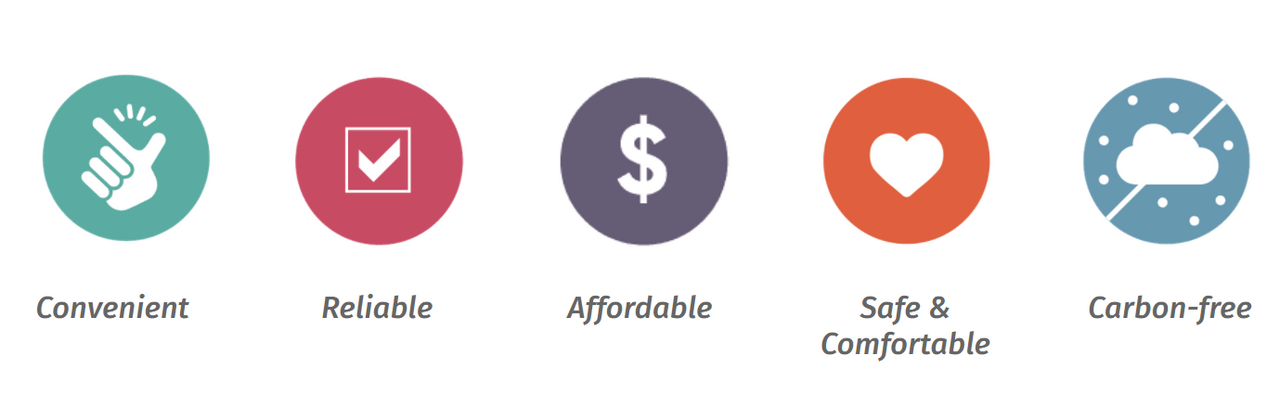
TransLink has created five goals to help deliver the transportation future:

Read the full Transport 2050 Strategy, here. Read the Executive Summary and other documents, here.

This website uses cookies to ensure you get the best experience on our website. Learn more