Mike Priddis describes a Third Renaissance and the humanisation of work
Mike summarised the challenge for business leaders: the tech-led fourth industrial revolution is having a huge impact on work, with leaders striving to reshape business, tech and people strategies. Insight reports are quickly out of date, the media is full of doom and gloom, and CTOs are bombarded with new technologies and short-term solutions. To them the market is “a kaleidoscope, with pinpricks of light changing every time they look”.
Mike launched Faethm AI to bring clarity to the market. A SAAS platform with four AIs within it, Faethm holds more data than any other company globally, with two billion jobs and 160 million individual employees’ work analysed. The company analyses the impact of 130 different technologies on every industry in the largest 152 economies, and provides scenario modelling to corporate and government leaders.
This enables them to get ahead of the curve to decide where to invest and what a tech portfolio should look like. However, “Don’t take a short-term approach to tech because it is difficult to be a fast follower in a market moving this fast”.
“AI is driving the ‘humanisation of work,’ with a rapid, at-scale transition to new types of jobs”
Recalibrating how we think means changing the language. With roughly five-year leadership tenures, asking the C-suite to focus on the ‘future of work’ is a licence to defer. A member of the WEF Global AI Council, Mike pushed the WEF into renaming it the ‘evolution of work,’ normalising change and keeping it current.
Mike outlined three outcomes in this evolution through AI:
1. Automation, and the need to take care of people losing jobs;
2. Augmentation, the biggest effect in most industries, where people retain jobs and use tech to achieve greater capacity or productivity; and
3. Addition, where new jobs are created.
Tensions between business and government are alleviated by companies using Faethm’s data to show governments ‘we’ve got this, we are acting’, quelling concerns about mass redundancies and a universal basic income.
In what Mike describes as a Third Renaissance, AI is driving the ‘humanisation of work,’ with a rapid, at-scale transition to new types of jobs. “If we get this right, don’t defer action, and think about L&D, investment and infrastructure as key responses, not universal basic income, then we will look back on this period as the third renaissance”.
Isabel Fernandez-Mateo warns beware the ‘data trap’ and built-in bias
Isabel provided academic insight into the perils of the ‘data trap,’ urging us not to take data for granted or at face value. With the explosion of big data, machine learning and AI analysing data, leaders face three challenges:
1. Collecting huge amounts of data without knowing what to do with it;
2. Collecting too little data so they can’t obtain basic insights;
3. Collecting data but not the right data, invalidating any analysis.
“My goal is to help leaders avoid data traps so they take full advantage of AI innovations. It’s essential to educate senior leaders to ask the right questions and critically evaluate the answers, using rigorous data and analysis.”
Isabel shared an example. Data she collected from 10,000 UK executives on why some will compete for a job and others decide not to, revealed a surprising discovery: the deciding factor is rejection.
Executives are less likely to compete for a job having been rejected for a similar job before, but the data gave no quantitative indication for why this could be. The data revealed an interesting finding, but no actionable solutions without talking to the executives involved. Subsequent interviews revealed the key issue: the recruitment process. Numerous executives said, “I will never put myself in that position again,” because the process felt neither fair nor properly managed.
Data does not capture emotional or relational elements and it is the combination of quantitative and qualitative insight that provides business value.
“Leaders must understand how AI tools fit within complex systems of relationships”
“What matters is managing these relationships, how you set expectations and what kind of information you give to candidates”. This is not recorded in quantitative data nor in the data AI uses in people analytics.
Isabel provides training in proper analysis, using the right data and complementing these skills with human and relational factors. “Leadership is about managing people and relationships, and AI will not change this. We need to use rigorous research and analysis so leaders must understand how AI tools fit within complex systems of relationships”.
Lucy Shoring focuses on ‘mass learning,’ with education starting at the top
Lucy described practical approaches to the evolution of work at MetLife.
With so much that is new, “Everyone starts from a learning perspective and before launching digital training for our teams, we realised we needed to educate our senior leaders on the impact of automation and how disruption will affect our industry”.
The first goal: to understand the leaders’ level of knowledge. This initial engagement led to discussion about the work itself and how it could change. Leaders were then interviewed to achieve buy-in and engagement for a new L&D programme, with interviews continuing throughout the process.
Next came the work itself. “We collaborated with those leading work in particular areas, such as front line, back office and functional areas to think through the work itself, breaking it down into subsections to identify repetitive work ripe for automation, rather than human skills”.
“The learning perspective helped people to understand that evolution is not about mass redundancy but mass learning and a shift in skills”
It’s an ongoing journey. MetLife has a number of robots in the organisation and by the end of 2020 will have more, with future enhancements to be incorporated.
“The learning perspective helped people to understand that evolution is not about mass redundancy but mass learning and a shift in skills. It about moving away from tedious work to retrain in value-added activities and marketable skills that support a career trajectory.”
The current focus is to gather an understanding of current skills, the skills needed and gaps to be filled in future. “This links to talent acquisition, which we want to turn on its head. MetLife’s brand perception in the market is very important, so we are reviewing talent acquisition to make it as engaging as possible and build an understanding of who is out there in the market.”
In wrapping up, Nick Robeson, Managing Partner of Boyden UK & Ireland described “This new renaissance, characterised by investing in L&D, infrastructure and leaders whose digital priority is this: to blend relational and qualitative understanding with AI based on properly validated data. It will take creativity, teamwork and the agility to work at speeds set by technological change”.
Boyden’s own investment in AI provides leadership advisory solutions to clients in consumer & retail, financial services, healthcare & life sciences, industrial, social impact and technology.
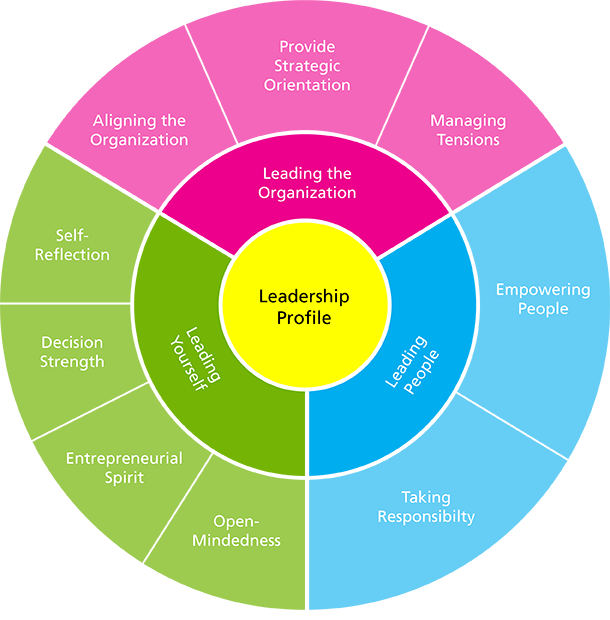
Andy Wolfe, Lead Partner of Leadership Consulting in the UK, points to the Boyden Leadership Model (BLM), one of Boyden's AI innovations in leadership advisory. The BLM is a synthesis of academic data, client-guided analysis and qualitative interpretation by Boyden experts. It combines meta-analysis on strategic leadership with expertise in talent advisory and business psychology to predict how leaders will perform in this third renaissance.
We practice what we preach.
The Boyden Leadership Model (BLM) works in concert with our leadership advisory services in executive search, leadership assessment, on-boarding, board and committee nominations, board performance, leadership development, succession planning and internal promotions.