Articles & Papers

Navigating Uncertainty: Private Equity's Next Phase of Value Creation

In this edition of Navigating Uncertainty, explore how private equity's continued evolution is redefining operational leadership, talent, and value creation, while AI accelerates the next phase of transformation.

By Boyden’s Global Private Equity & Venture Capital Practice

July 2026

A new era for private equity: maturity, complexity and operational leadership in the age of AI

Private equity continues to evolve, responding to changing markets, technological disruption, and rising expectations of leaders and portfolio companies alike.

In Edition 1 of Navigating Uncertainty, we explored the new arbiters of success in private equity, value creation, talent trends, and the industry's growing role in the global economy. Edition 2 examined how firms were navigating geopolitical uncertainty, AI, evolving liquidity and funding models, and shifting leadership priorities.

In this edition, we examine the continued maturation of private equity, how the industry's approach to value creation is evolving beyond financial engineering, and what today's operating environment means for leadership, talent, and long-term outperformance.


Part I: Sustained evolution drives outperformance  

Recent decades have thrown a variety of threats and assumptions at the private equity industry, even a suggestion the industry had peaked1

On the contrary. Today, the industry is part of the global financial ecosystem, transforming industries and improving day-to-day lives across the world. In this environment GPs have evolved from financial engineers, to curators and providers of operational expertise, deepening their engagement with portco leaders, resulting in exceptional results.

We are witnessing the ‘institutionalisation of operational expertise,’ described as ‘one of the most significant structural changes in the industry’ with operating partners central to investment strategy, due diligence, and value creation planning2.

Specialised teams in value creation, digital transformation and talent development have effectively become internal consulting engines, providing resources and expertise to portcos that would otherwise be prohibitively expensive.

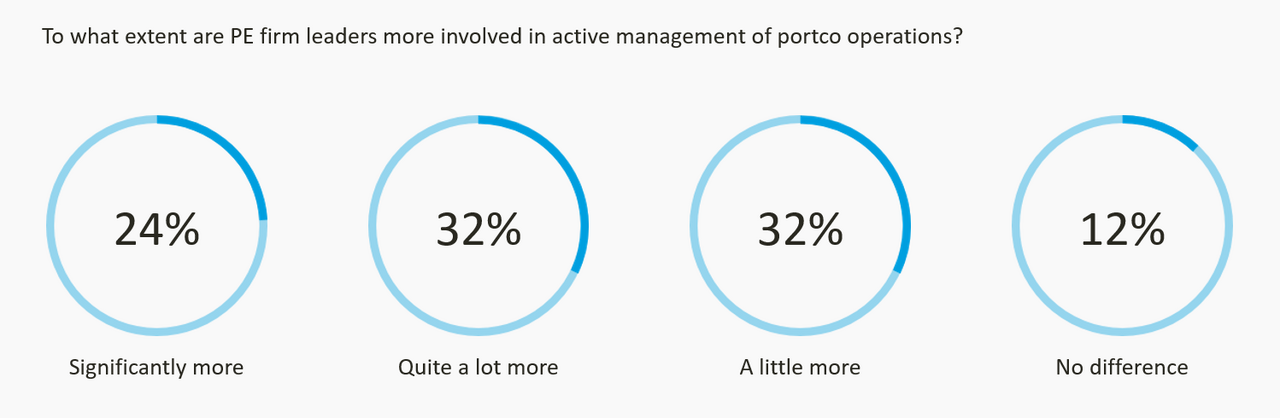
Boyden poll data affirm that PE firms are spending more hands-on time running portcos, adapting their skills to longer-term asset management and identifying and developing talent: nearly a quarter of PE firm leaders, 24%, are significantly more involved in active management of portco operations; while 64% are quite a lot or a little more involved.
 

To what extent are PE firm leaders more involved in active management of portco operations?     

Source: In June 2026 Boyden conducted a poll among the firm’s global private equity & venture capital experts, capturing sentiment and strategies among clients, GPs, LPs and commentators in the sector.

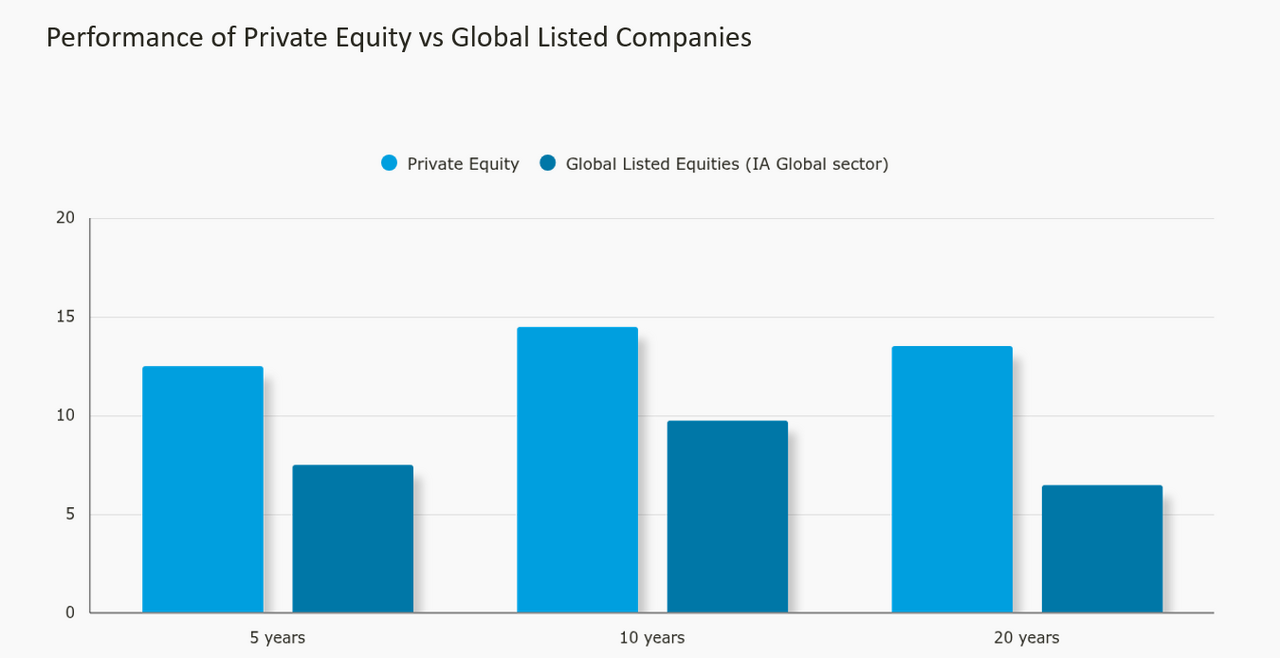
As the industry matures, financial engineering continues, broadening out to attract retail investors, offer co-investment strategies and pursue a greater share of M&A activity. Closer alignment through operational expertise, deeper portco engagement and on-going financial innovation has seen the industry continue to outperform global markets. In the last 10 years, private equity funds achieved performance of nearly 5% more than global listed equity funds, with returns of 14.4% and 9.6% respectively.

However, as Alix Partners insists, ‘PE cannot continue to outperform public markets unless the industry strengthens its ability to find, develop, and keep leaders with transformational skills3


In the last 10 years, private equity funds achieved performance of nearly 5% more than global listed equity funds, with returns of 14.4% and 9.6% respectively.

Source: Wealth Club, using data from Morningstar to Dec 20254


Part II: Maturity demands breadth and depth

Transformational leaders are among the key challenges for GPs. A maturing industry also sharpens the need among portcos for differentiation in product lines, closer shareholder engagement and leadership alignment.

Anita Pouplard, Global Practice Leader, PE & VC, and Managing Partner, France explains, “This new era is fundamentally reshaping what private equity expects from leadership, particularly at the CEO level. In an environment defined by greater complexity, persistent uncertainty and AI-driven disruption, experience and technical expertise alone are no longer enough. The leaders who create the most value are those who combine resilience, adaptability and systems thinking with the capacity to learn continuously, remain self-aware and make sound decisions under sustained pressure. These capabilities have become critical predictors of long-term value creation."

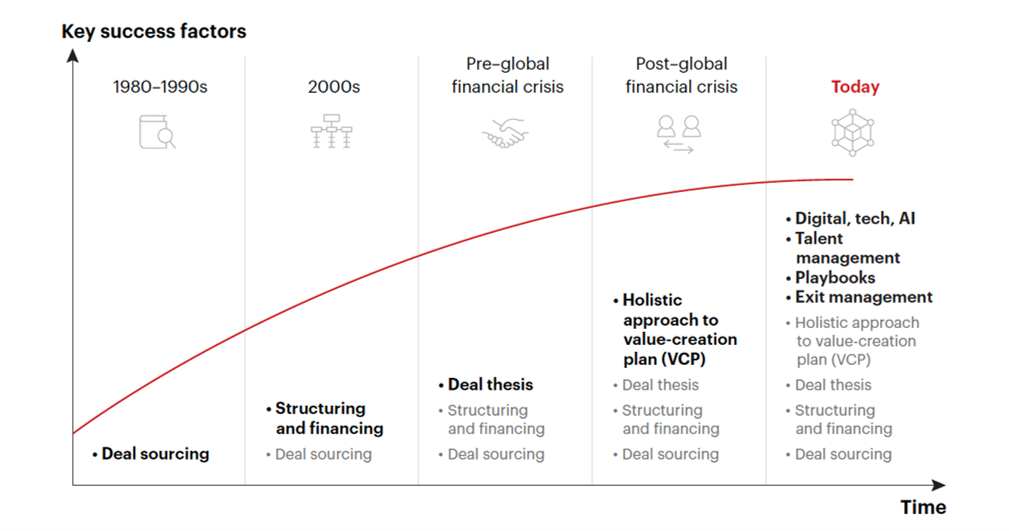
GPs are no longer sourcing deals, structuring & financing organisations and pursuing value creation; they are intricately involved in digital, tech and AI transformation, evolving the playbook, exit strategies and talent management.

This has changed the economics and management of private equity firms, multiplying success factors; as Bain shows in the graphic below, winners are using multi-dimensional strategies to tell a coherent story.


Private equity firms today are considerably more complex and more expensive to run

Economic challenges in the global environment coupled with pressures within the industry are having a major impact on (i) achieving alpha; (ii) management fees; and (iii) the need for greater operational effectiveness, sharpening the focus on leadership of PE firms as well as portcos.


Private equity firms today are considerably more complex and more expensive to run

Source: Bain & Company

I. Achieving alpha: ‘12 is the new 5’ 
Rising interest rates and market dynamics are impacting deal math5. Bain analysis reveals that 10 years ago, at 6-7% interest, firms needed 5% annual growth in EBITDA to generate a 2.5x multiple on invested capital after 5 years. Now at 8-9% interest, firms need 12% growth to generate 2.5x return over 5 years.

II. Management fees
PE fee structures are changing due to increasing costs, while market dynamics are putting pressure on income. At the same time:

  • Competition for capital is pushing management fees down (from headline management fees of 2% to 1.6% average management fee for a buyout fund)6;
  • Co-investment is evident across all fund sizes, reducing fee income by a median of 25%7

III. Need for operational effectiveness and transformational leadership
Portco CEOs, CFOs and CHROs, most notably, are facing an increasingly complex environment that is demanding ever more adaptive, resilient, and anticipatory leadership as well as the core suite of skills. It’s not the talent pools that are changing as much as the focus on temperament and personality; this industry needs leaders at the top of their game, both professionally and personally.


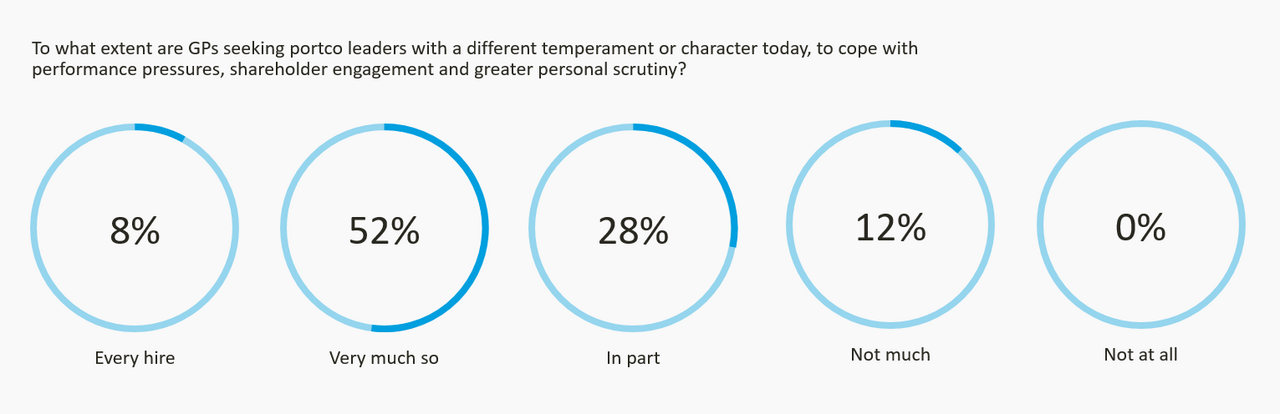
Boyden poll results show that GPs are seeking portco leaders with a different temperament or character in over half of their hiring activity, at 52%; for 8% a different temperament is sought for every hire.
 

To what extent are GPs seeking portco leaders with a different temperament or character today, to cope with performance pressures, shareholder engagement and greater personal scrutiny?

Richard Waddell, Boyden’s Global Practice Co-Leader, Leadership Consulting, based in the United Kingdom, comments, “In private equity, the question is not just who looks right on paper, it is who can actually deliver. We bring together rigorous, evidence-based leadership assessment and deep market knowledge to help portco boards understand whether a leader can scale a business, drive transformation and create value”.

The need for transformational leadership is starkly visible in tech investments, where AI is redefining business models, leadership requirements, and the drivers of enterprise value.


Part III: When business models reset: AI creates ‘intelligence as a service’

SaaS businesses provide one of the clearest examples of how AI is resetting assumptions around growth, valuation, and value creation.

Heavy investment in previously sticky, high margin software companies has, in the era of AI, created a so-called ‘SaaS-pocalypse’ with a crash in the valuations of software companies in a new competitive environment. Some commentators, such as LPGP Connect, point to an ‘AI reckoning’.

According to CatalAIze, in Q1 2025, 58% of VC funding went to AI-native companies, with traditional SaaS companies facing ‘survival of the fittest’. Bain notes PE firms dividing portfolio companies into ‘AI-native’ (high potential) and AI-adapter (high risk) categories.

Private equity and VC funds loaded up with SaaS are now struggling to meet exit valuation goals. Multiples have plunged and re-gearing these assets is a top priority. From a VC perspective, it has become extremely complex if not impossible to raise money for a SaaS play with no strong AI component,” explains John McCrea, Boyden’s Global Sector Co-Leader, AI, Cloud & Software, and Americas PE/VC Regional Practice Leader.

Software, semi-conductor and cybersecurity providers are striving to keep pace with AI developments, moving towards ‘intelligence as a service’. Transformative Head of AI roles are therefore synthesising strategic, commercial, technical, operational, human capital and collaborative capabilities. William J. Farrell, Boyden's APAC PE/VC Regional Practice Leader, explains, “These leaders are running teams comprising directors, managers, AI research scientists, AI engineers and business intelligence experts, to deliver for example, supply chain intelligence, HR management, competitor analysis and production planning. The strategic priority is to transform the enterprise through high-impact AI-enabled systems, while overseeing on-going, advanced AI research for future deployment”.

Forrester’s Kate Leggett asserts, ‘[So-called] “death of the core” and “death of SaaS” narratives are overstated. The brain of the enterprise remains, the central nervous system is evolving, and the centre of gravity is becoming more intelligent8’. 

The advent of AI is the next reset in an on-going cycle: we have seen ‘on-premise’ move to SaaS; and SaaS move to AI, with AI redefining how decisions are made, not just how work happens. Software Equity Group (SEG) points to fast movers and integrators such as Microsoft, NVIDIA and Adobe, with laggards being feature-only SaaS vendors adding AI as window dressing.

Microsoft rapidly embedded AI across its productivity stack through Microsoft 365 co-pilot, shifting software from a tool you operate to an intelligent system that helps operate the work. The company is enabling ‘agent operated’ workflows that automate decisions and action steps across documents, meetings and daily tasks, extending far beyond mobile interfaces into a continuous intelligence layer9.

Adobe integrated AI into its software by giving humans a ‘creative superpower’ rather than replacing them, integrating powerful AI models into familiar legacy apps such as Photoshop and Acrobat. Another distinctive approach was to act as an aggregator, so users could access third party tools such as Google, OpenAI, or Black Forest Labs inside Photoshop. Other intelligence tools include document summaries, data manipulation and answers to questions within a document10.

For software businesses, the challenge is therefore not awareness, it is translating urgency into execution. These organisations need AI leaders with experience leading teams delivering advanced AI-enabled analytics and system design, responding to the needs of business stakeholders, and recruiting and developing AI research scientists and engineers for the next iteration of the cycle.

Despite high levels of uncertainty and complexity, the outlook is favourable, with optimism around the key challenges of:

  • Delivering on the math: infrastructure AUM are forecast by Preqin11 to reach 12.9% annualised growth rate by 2030, spurred primarily by Europe (achieving 12 as the new 5);
  • Addressing management fee compression: this will be lifted by longer fund durations for infrastructure and a higher volume of AUM, projected to reach $3 trillion by 203012.
  • Redefining operational effectiveness and transformational leadership: the trend towards increasingly active management, and greater stakeholder engagement, indicates a boost in operational effectiveness.


Part IV: Talent truths

As models change across the board – from funding and investors, to organisational and business – what does this mean for leadership? And do we have the right portco leaders and GPs to lead the industry through this new stage of maturity?

Boyden poll data show that adaptability, resilience and influence are the top three most important skills in assessing portco candidates:

Boyden poll data show that adaptability, resilience and influence are the top three most important skills in assessing portco candidates

The right portco CEO is scrutinised intensely by PE firms, investors and the CEO themselves in terms of expectations, performance, shifting timeframes and market dynamics. AlixPartners 11th Annual PE Leadership Survey finds that misalignment between investors and portco management is slowing transformation, complicating AI investment and increasing leadership turnover.

Key findings reveal nearly two-thirds of private equity firms replace portco CEOs during the holding period, as the firm explains, ‘highlighting the intense leadership pressure in PE-owned companies and the growing challenges of executing value-creation strategies in today’s volatile environment’.

  • 83% of PE executives say unplanned CEO turnover lengthens holding periods, and nearly half say this reduces returns
  • 65% of PE firms report CEO turnover during the holding period
  • 9% only of PE leaders say their firms rarely replace CEOs

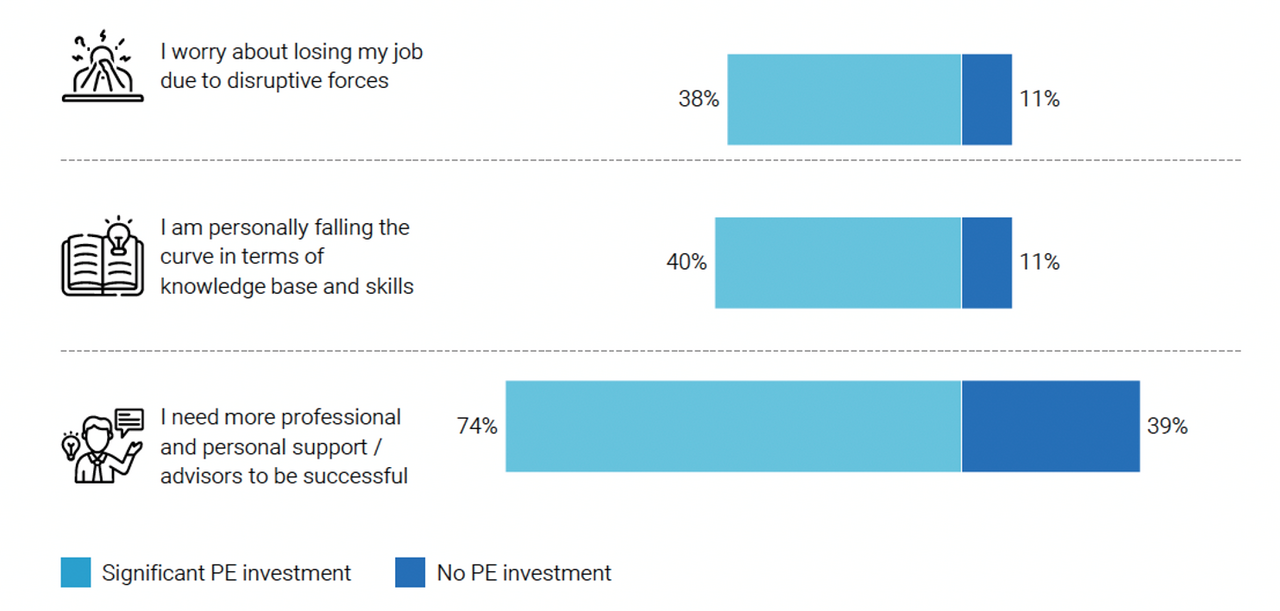
Portco executives are acutely aware of the myriad demands on their capabilities. While 38% worry about losing their jobs due to disruption, even among portcos with significant PE investment, 40% of executives feel they are personally falling behind the curve in knowledge and skills; 74% say they need more professional and personal support or advisors to be successful.


Portco executives feel the pressure

Portco executives feel the pressure

Source: AlixPartners 11th Annual PE Leadership Survey 2026

This is why leadership assessment is so crucial. Alix Partners highlight a rethink: not just assessing capabilities in the run up to a deal, but in the first 100 crucial days and again during the holding period. The quality of assessment is also key: psychometric tests, while useful, are insufficient fully to understand a leader or teams’ fitness for challenges, style of leadership and ability to self-regulate in an uncertain, complex and challenging environment.

Boyden’s distinct leadership consulting and executive search teams work in tandem to address this by evaluating the entire C-Suite – during strategic planning, fund raising or prior to investment to ensure investor, cultural, operational and team alignment, benchmarked to the market.

Kathleen Dunton, EMEA PE/VC Regional Practice Leader, concludes, “We have worked with those who created and developed the private equity and venture capital industry for more than twenty years. We have grown together, identifying, nurturing and mentoring leadership talent, uniquely aligned to each client. Through them we see this extraordinary industry evolving into a pivotal part of the global financial ecosystem and an important ‘sponsor’ of the future”.

This new era for private equity reveals the extent and speed by which it has matured, through on-going innovation and business model reinvention. Outperforming public markets is an impressive achievement, and its continuance depends on the industry finding, developing and retaining leaders with transformational skills. Investment in people is a key indicator in maturity – the time has now come for private equity to complete Harold J. Leavitt’s golden triangle of process and technology, with people13.


Produced by Boyden's Private Equity & Venture Capital Practice, Navigating Uncertainty is an ongoing thought leadership series exploring the defining trends shaping the future of the industry. Through the perspectives of Boyden experts worldwide, each edition provides forward-looking analysis, actionable insights, and leadership intelligence to help investors and portfolio executives anticipate what's next and create lasting value.


Further Engagement

[1] Have we reached peak private equity? Boyden’s Navigating Uncertainty, edition 1

[2] VCII ‘Beyond Financial Engineering: the $850 billion operational excellence revolution’

[3] Alix Partners: Expectation and execution: Leadership for success in private equity

[4] Wealth Club: Private equity performance

[5] Bain & Company 2026 Global Private Equity Report

[6] According to Preqin, reported by CNBC Inside Wealth

[7] Bain & Company private equity outlook for 2026

[8] Forrester report: SaaS as we know it is dead: how to survive the SaaS-pocalypse

[9] SEG: The AI Reset

[10] Ibid.

[11 Preqin Infrastructure in 2026 Global Report

[12] Ibid.

[13] See Forbes’ Technology Council Post on People Process Technology

For PE/VC firms seeking to discuss their leadership strategy, Boyden's Private Equity and Venture Capital Practice offers the global expertise and local insights necessary to identify, evaluate, and place the executives who will drive success in your business.

This website uses cookies to ensure you get the best experience on our website. Learn more