Collaboration with community
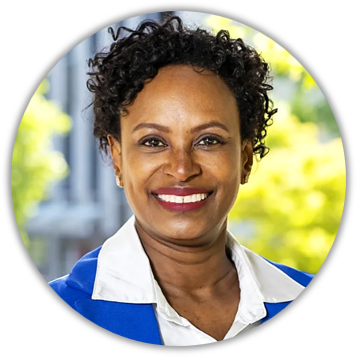
She holds a Canada Research Chair in Tactile Interfaces, Communication and Cognition, studying human-machine interactions and the social and cognitive effects of technologies. Lately, that has meant working with AIDE Canada administered by the Pacific Autism Family Network Foundation in BC on assistive technologies to support people with autism. The work serves as a reminder to her about the value universities can provide to their neighbours and regions—strengthening communities, driving job creation and fuelling business growth.
“How can we show our worth to our local communities, the province and to taxpayers? That’s easier if they believe in our mission. But how do we deliver value to households that may never actually have an interaction with the university? Often, I find I am trying to answer questions that Canadians, in general, have, whether or not they’ve gone to university.”
Her ability to nurture partnerships and relationships made McEwen stand out during the selection process. McEwen was recommended by the appointment committee composed of members from the Board of Governors, Senate, faculties, staff, the student body and alumni in the community. Consultation with the campus and broader community helped shape the job profile and significantly informed the search.
Dr. Rhonda McEwen is an energetic and approachable leader, with the ability to build authentic relationships across the campus, Vancouver Island and the globe. She is a student-centred leader, holding deep commitments to equity, experiential education and supportive learning environments. She is distinguished as a scholar and researcher who has a reputation for advancing knowledge and innovation through partnerships. The committee recognized Dr. McEwen as an inspirational advocate for higher education in Canada and beyond.”
—Erinn Pinkerton, UVic Board of Governors acting chair
Students at the centre
How much a university is valued by its community is often a result of quality student experiences. McEwen takes her role of preparing students for citizenship in a rapidly changing world very seriously, and defines student success by a special mathematical formula.
Student success is equal to talent plus opportunity plus resources. So, I always tell my students they come with one-third of the equation already, because everyone arrives with raw talent. It’s a matter of creating those opportunities for students on and off campus, through partnerships and relationships.”
—Dr. Rhonda McEwen
“But then my job is to go out there and find resources that will support the faculty, staff and librarians to make that experience even better, to grow that talent.”
Sometimes, supporting that growth means slowing things down and helping an individual at a particular point in time. She recalls, during her tenure as a professor at the University of Toronto, one student came to her concerned about public speaking assignments. McEwen agreed to individually coach the student and supported multiple attempts to improve their skills. When it came time for the final presentations, although there was improvement, the student struggled to perform.
“We didn’t get the fairy tale ending that term. But a year and a half later, she came to see me again. She had gotten a job with TD and every week she had to present to senior executives,” McEwen recalls. “She told me, ‘All I could think about was you telling me to keep trying. Now I’m so good at public speaking. I do it all the time, and I’m one of the best.’
“Not giving up on her was the lesson. She taught me that, though I didn’t see it in the term. Her growth started in my class. I learned to be patient. Some things take time, but the seeds are there and they will eventually bear fruit.”
Creating room for all
McEwen brings an equity lens deeply rooted in lived experience. She was born in Trinidad and Tobago, lived and worked in many countries, and came to Canada as an immigrant. As a woman in STEM investigating neurodiversity, she sees there is so much work to be done, in and outside academia, for greater inclusivity. The challenge for leaders is to ensure all students see themselves in the vision of the university, no matter how they identify.
“Every single UVic student must feel that they are part of the institution. How that looks on the ground to the student: that we see them, we care for them and they are deserving of our time and our effort,” she says. “On the leadership side, we have to constantly check that our actions, activities, things we say and spaces that we create are accessible to everyone in the broadest sense.”
She was inspired by UVic’s commitment to ÁTOL,NEUEL. Although new to the West Coast, she is eager to listen and learn from Coast Salish Peoples about their culture and traditions—and understands those conversations can demand growth and change.
“For me, when it comes to reconciliation, there isn’t going to be a day where people go, ‘Canada is done. It’s finished and we fixed it.’ It is going to be a journey. There will be highs and lows on this journey, and it will take time, but we need to do the work,” she says.
Leading during change
The post-secondary landscape is evolving quickly, between shifting public policy on international students and the sweeping technological advances of AI. The self-professed pragmatist says she leans in on collaboration, transparency and her work in private-sector consulting, where she helped large organizations navigate challenging financial terrain with new, intentional opportunities.
“Universities in Canada are in a moment where finances are tighter than they have ever been. In Ontario, I’m known for delivering financial stability. I’m excited to help with creative solutions to get the resources UVic students, staff, faculty and librarians need,” she says.
Rising to the challenge requires patience, and McEwen reminds herself of the persistence needed with a Latin saying: Propterea quod qui audet adipiscitur, which translates to English as: Because she who dares, wins.
“I passionately believe in higher education, and I want to make sure we put forward the best experience for students and provide value to our local communities,” she says.
Daring is a response to the challenges in front of us. The underlying message is: we can, and should, all dare. We should strive to be better, and contribute in many ways. In that way, everyone wins. We all win if we can dare to be better, together.”
—Dr. Rhonda McEwen
Original Source: UVic News